What Is The Most Famous Food In Romania?
Sarmale is the dish most Romanians name first, but the full answer runs through Timisoara and the Banat region, where cabbage rolls, gulas supa and paprikash share one menu.
Sarmale, cabbage rolls stuffed with minced pork and rice and slow-cooked for hours, is the single dish most Romanians would name when asked what the most famous food in Romania is, and Timisoara, the main city of the Banat region in western Romania, is one of the best places in the country to eat it well. The city's kitchens sit at a crossroads of Romanian, Hungarian, Serbian and Swabian German traditions, so a meal here answers the question more generously than a one-word reply ever could.
What Is The Most Famous Food In Romania, Exactly?
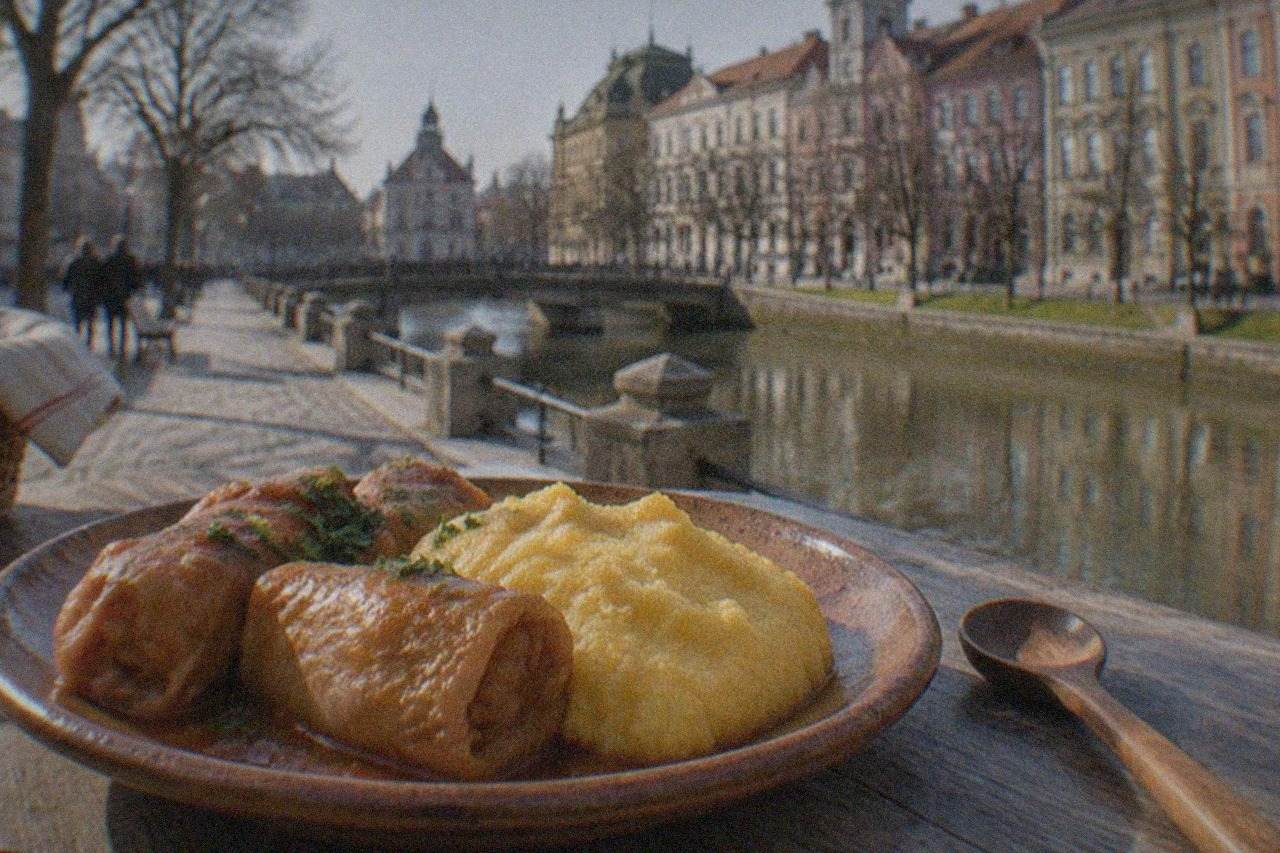
The most famous food in Romania is sarmale, rolls of pickled or fresh cabbage leaves stuffed with minced meat, rice and spices, simmered slowly and traditionally served with mămăligă, a polenta-like cornmeal porridge, and smântână, a thick cultured cream. Romanians eat sarmale at weddings, at Christmas and at Sunday lunches, and the dish appears on nearly every traditional menu in Timisoara. If a single plate stands for Romanian cooking as a whole, this is it.
Sarmale arrived in the Romanian lands through Ottoman and broader Balkan influence, and every region claims its own version. In the Banat plain around Timisoara, cooks often use fresh cabbage when pickled leaves are out of season, and the filling leans heavier on pork than in some southern variants. The rolls are packed tight in a pot with dill, thyme, bay leaves and sometimes smoked pork, then left to simmer until the cabbage turns silky and the stuffing absorbs the broth.
What makes the dish genuinely national rather than merely regional is its role in the calendar. Christmas Eve and New Year are the peak sarmale moments, when families roll dozens at a time, but the dish is a year-round presence on restaurant menus too. In Timisoara, a city whose food culture is surveyed in detail on our Timisoara food guide, sarmale is the benchmark dish against which a traditional kitchen is judged.
Two companions matter as much as the rolls themselves. Mămăligă, the golden cornmeal porridge that predates bread in the Romanian diet, is the standard base, and smântână, a rich soured cream, is spooned over the top. Ask for all three together and you are eating the plate most Romanians would call home cooking.
Which Other Romanian Dishes Are Famous Enough To Rival Sarmale?
After sarmale, the most famous Romanian foods are mămăligă with cheese and cream, ciorbă, the sour soup category that includes ciorbă de burtă tripe soup, mici, small skinless grilled rolls of minced meat, papanași, fried cheese doughnuts with jam and cream, and cozonac, a sweet braided bread baked for holidays. In Timisoara, gulas supa and paprikash, inherited from the Banat's Hungarian and Swabian heritage, belong on the same list.
Mici are the closest thing Romania has to street food. The rolls are seasoned with garlic and spices, grilled over charcoal and eaten with mustard and bread, no fork required. Ciorbă is less a single dish than a technique: the sourness comes from borș, a fermented wheat liquid, or from lemon juice, and the category runs from tripe to meatball to vegetable versions. Ciorbă de perișoare, sour meatball soup, is a common weekend order.
Papanași close the meal in most traditional restaurants. The dough is fried, split open, filled with a soft sweet cheese, and finished with sour cherry jam and cream. Cozonac, by contrast, is a home baking tradition, a braided sweet loaf studded with walnuts or cocoa swirls that appears in force around Easter and Christmas.
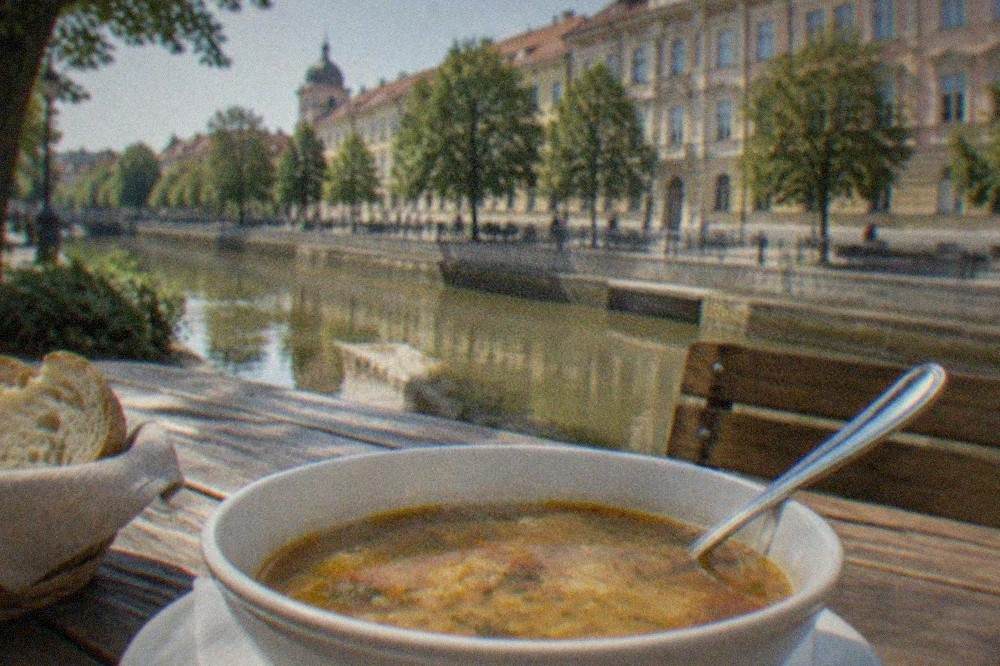
The Banat additions deserve their own mention. Gulas supa here is a soup rather than the Hungarian stew, a rich paprika broth with meat and vegetables, and paprikash, chicken or pork in a creamy paprika sauce, is a legacy of the Hungarian and Swabian families who shaped the region's kitchens. Timișoara, under its Hungarian name Temesvár, spent centuries under Hungarian administration, and the city's menus still show it.
Where Should You Eat Traditional Food In Timisoara?
The best places to eat traditional food in Timisoara are the restaurants around Piata Unirii in the Cetate old town, the quieter kitchens of the Elisabetin and Iosefin neighborhoods, and the daily market halls where locals shop for the raw ingredients of Banat cooking. Cetate offers the highest concentration of menus with sarmale, gulas supa and paprikash, while Elisabetin and Iosefin hold the neighborhood places that regulars return to.
The old town is the natural starting point for a first evening. Menus there lean traditional because visitors expect it, and the quality of the sarmale is a fair test of the kitchen as a whole. A short walk across the Bega canal brings you into Elisabetin, a low-rise neighborhood of tree-lined streets where the restaurants are smaller and the cooking is closer to what families actually make at home. Iosefin, further west, works the same way.
For a sense of where the food comes from before it reaches a plate, the neighborhood markets are worth a morning. Cabbage, peppers, paprika and sour cream are the backbone of the regional pantry, and the stalls sell them in the quantities home cooks buy. You will not find English menus everywhere, which is part of the point, and the question of whether language is a barrier is covered in do they speak English in Timisoara.
Ordering follows a simple rhythm in most traditional places: a sour soup to start, a main of sarmale or paprikash with mămăligă, and papanași if there is room. Portions run generous, and the pace is unhurried. Sunday lunch is the local peak, so book ahead if you want a table in the old town then.
What Makes Banat Food Different From The Rest Of Romania?
Banat food differs from the rest of Romanian cooking through its layered Hungarian, Serbian and Swabian German influences, a heavier use of paprika and pork, and signature dishes such as gulas supa as a soup, paprikash and the Banat-style layered cabbage roll. Timisoara sat at the edge of the Habsburg Empire, and its kitchens absorbed the neighboring traditions that the rest of the country absorbed only thinly.
The history explains the plate. The Banat was a frontier province where Romanian, Hungarian, German and Serbian communities lived side by side for centuries, and its cooking borrowed from all of them. Paprika arrived through the Hungarian channel, the smoked and cured pork tradition through the Swabian one, and the grills and stews through the Serbian. What came out is a cuisine that a visitor from Bucharest recognizes but does not quite identify as home. The rest of the planning pages sit on Timisoara Travel Guide.
A few specifics separate a Banat menu. The gulas is a soup, lighter than the Hungarian stew of the same name. The sarmale are often made with fresh cabbage rather than pickled, and the pot may carry a smoked meat note that southern versions skip. Serbia's proximity shows up in the grilled meats and in the occasional appearance of dishes that a visitor from Belgrade would also recognize, a closeness explored further in what is Timisoara known for.
None of this makes Banat food better or worse than the cooking of Transylvania or Wallachia. It makes it broader. In Timisoara you can eat the national classics and the regional specialties in the same evening, sometimes on the same menu, which is precisely why the city is a good place to ask the most-famous-food question in the first place.
How Much Does Eating Out In Timisoara Cost?
Eating out in Timisoara is inexpensive by Western European standards: an inexpensive restaurant meal runs roughly 45 to 50 RON, a cappuccino about 13 to 15 RON, and a half-liter of domestic draft beer about 11 to 12 RON, according to cost-of-living trackers updated in September 2026. Traditional restaurants in the old town sit at the upper end of these ranges, neighborhood kitchens at the lower end. Prices are in Romanian lei, not euro.
The ranges come from crowd-sourced price indexes, and they move with the season and the venue, so treat them as planning figures rather than promises. A full traditional dinner, soup, main and dessert, will cost more than the single-meal figure, and a place with a terrace on Piata Unirii will charge more than a kitchen two streets off the square. The exchange rate matters too: the Romanian leu is the till currency, and the euro is not adopted, a point covered fully in our guide to the Romanian currency.
| Item | Typical price in Timisoara (RON) | Notes |
|---|---|---|
| Inexpensive restaurant meal | 45 to 50 | Crowd-sourced indexes, September 2026 |
| Cappuccino | 13 to 15 | Regular coffee shop |
| Domestic draft beer, 0.5 L | 11 to 12 | Neighborhood pub |
| Fast-food combo meal | about 32 | Business-district lunch counters |
Two practical notes stretch a food budget further. Lunchtime menus, offered on weekdays by many kitchens, undercut the dinner prices for the same cooking. And the market stalls sell the raw ingredients of every dish on this page for less than any restaurant will charge to cook them, if you have access to a kitchen.
Can You Taste Romanian Food On A Guided Experience In Timisoara?
Yes, and a guided experience is an efficient way to taste Romanian food in Timisoara, because the city's food tours and neighborhood walks connect the dishes with the streets and stories behind them. A street food tour walks you through the local specialties with a guide who explains what to order and why, while neighborhood walking tours route you through Elisabetin and other food-rich districts where the traditional kitchens cluster.
The guided options divide by what you want out of the evening. A dedicated food tour keeps the focus on plates and tastings. A neighborhood walk keeps the focus on the city and lets you eat where the route leads. Both work, and the choice depends on whether the food or the place is the reason for the trip, a trade-off that also shapes the question is Timisoara Romania worth visiting.
The Elisabetin walk suits the food question particularly well, because the neighborhood's restaurant scene is one of its defining features. Beyond the city, the day trips into the Banat hills and the longer routes into Transylvania pass through villages where the cooking is even closer to its roots, and a guide on those routes will usually steer you toward the local version of whatever dish you have just learned to name.
Common Questions About Romanian Food In Timisoara
What is the most famous food in Romania?
Sarmale, cabbage rolls stuffed with minced pork and rice and slow-cooked with dill and smoked meat, served with mămăligă and smântână. It is the dish Romanians name first, the centerpiece of holiday tables and the benchmark of a traditional kitchen.
Is Romanian food spicy?
Romanian food is seasoned rather than spicy. Paprika is the most common spice, especially in the Banat, but the heat level is mild. Garlic, dill, thyme and bay leaves do most of the flavoring, and hot sauce is rarely on the table by default.
What do Romanians eat for breakfast?
Everyday breakfasts are light: bread with cheese and cold cuts, eggs, or mămăligă with cheese and cream in the countryside. Traditional restaurants in Timisoara serve brunch-style plates on weekends, but breakfast is not the main meal of the day.
Is Romanian food vegetarian-friendly?
It is workable but not effortless. Mămăligă with cheese, stuffed peppers with rice, vegetable ciorbă, fried cheese and papanași are reliable choices, and many kitchens will adapt a dish on request. The classic sarmale and paprikash are meat-based.
What should I drink with a traditional meal in Timisoara?
Local beer and the wines of the Banat hills are the standard pairings. The region around Timisoara has its own wine tradition, covered in our guide to Banat wine, and țuică, a plum spirit, is the traditional way to open a festive meal.
Is tipping expected in Timisoara restaurants?
Rounding up or leaving around ten percent is the local habit. It is appreciated rather than obligatory, and it applies to the traditional kitchens in the old town and the neighborhood places alike.
Sarmale answers the headline question, but the fuller answer is the one you eat your way through: a bowl of sour soup, a plate of cabbage rolls with mămăligă, a papanași to finish, all of it cooked in a city where four culinary traditions share one kitchen. That is what the most famous food in Romania tastes like when you meet it in Timisoara.