Timisoara Vs Cluj
Timisoara and Cluj are the two great cities of western and northwestern Romania, and travelers with time for only one want to know which deserves the trip. This guide compares them on the facts that matter.
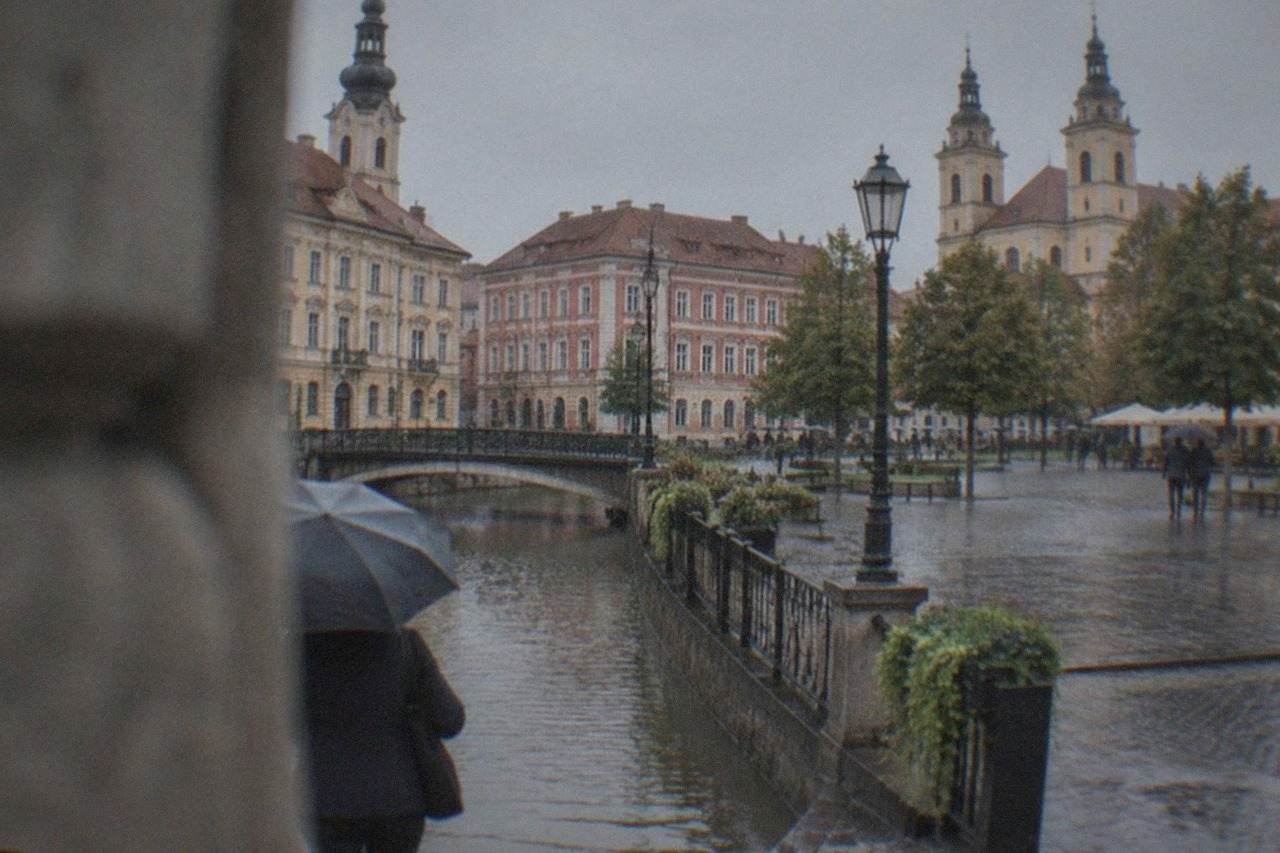
Short answer
Choose Timisoara for revolution history, Habsburg squares, the Bega canal, and easy access to the Banat hills and Serbia; choose Cluj for a bigger student city feel and Transylvanian surroundings. Every hard figure in this comparison is Timisoara's own, since this site verifies Timisoara data only.
Timisoara, in Timis County in the Banat region of western Romania, is one of the two cities travelers shortlist when planning a trip to the country's west and northwest, and Cluj-Napoca is almost always the other. The comparison is a fair one. Both are university cities with Austro-Hungarian legacies, lively squares, and cheap food by western European standards, and both sit within a few hours of border crossings. But they are not interchangeable, and the differences show up fastest in what surrounds each city, what happened in each city, and how much of either you can absorb in a weekend.
This page makes the comparison honestly. Every hard number quoted here, from the 5 lei bus ticket to the 22.8 C July mean temperature, is a verified or clearly attributed figure for Timisoara, because this site, Timisoara Travel Guide, verifies Timisoara data and not Cluj data. Where Cluj is described, it is described qualitatively, in terms a reader can check for themselves, and no figure is published for the other city.
Which City Should You Visit: Timisoara Or Cluj?
Pick Timisoara if your trip is about 1989 revolution history, Habsburg-era squares you can walk end to end, a canal-side city center, and day trips into the Banat hills or across the border to Serbia; pick Cluj if you want a bigger, louder student city and a Transylvanian setting. The two cities complement rather than replace each other, and a traveler with a week can honestly do both.
The honest first question is what kind of trip you want. Timisoara's identity is unusually specific: this is the city where the Romanian Revolution of December 1989 began, and the squares where it happened, Piata Victoriei above all, are still the emotional center of town. It is also a city of firsts, from the first horse-drawn tram in the Habsburg Empire in 1869 to the first electric street lighting on the European mainland on 12 November 1884, when 731 lamps lit 59 km of streets. Those two facts alone tell you what the city feels like: compact, walkable, and layered with history that a good guide can bring alive.
Cluj-Napoca's identity is broader and busier. It is the informal capital of Transylvania, home to one of the country's largest universities, and its old center is bigger and its nightlife louder. What it does not have is Timisoara's specific revolutionary story, and it does not sit on the Serbian border. If your mental image of Romania involves Transylvanian castles and mountain-fringed horizons, Cluj is the better base. If it involves cafe squares, river promenades, and the place where a dictatorship started to fall, Timisoara wins.
For a first-time visitor with two or three days, Timisoara is the easier city. Its historic core, Cetate, plus the surrounding neighborhoods of Iosefin, Fabric, and Elisabetin, fit together in a walkable triangle, and the one day in Timisoara itinerary genuinely covers the essentials. Cluj rewards a slower, less structured visit, and its attractions are more spread out.
How Do Timisoara And Cluj Compare On History And Atmosphere?
Timisoara's story is Banat Habsburg multiculturalism plus the 1989 Revolution: three state theatres in Romanian, Hungarian, and German since 1953, a city that was the first in the Habsburg monarchy with lamp-lit streets in 1760, and the place where the uprising against Ceausescu started in December 1989. Cluj's story is Transylvanian, Hungarian-rooted, and medieval. The atmospheres differ accordingly, and both reward knowing the history before you arrive.
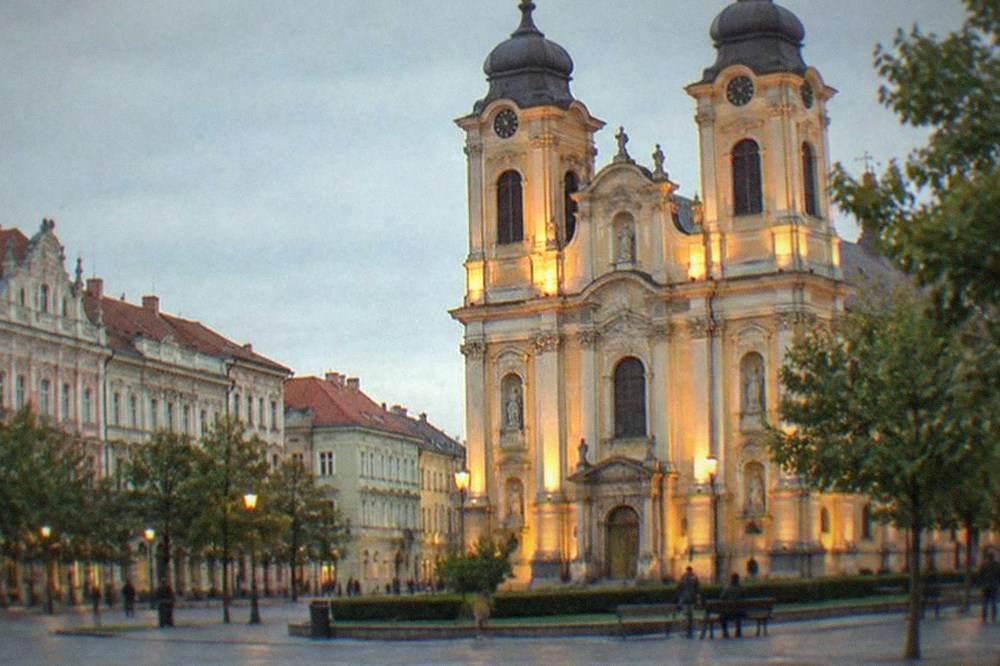
Timisoara, historically known as Temesvár in Hungarian and Temeswar in German, spent its formative centuries as a Habsburg fortress city in the Banat, a region deliberately resettled with German, Hungarian, Serbian, Romanian, and Jewish communities. That mix is still visible: the city has an Orthodox Metropolitan Cathedral, a Roman Catholic cathedral, a Serbian Orthodox cathedral, and two historic synagogues within a short walk of each other, and since 1953 it has been the only European city with three state theatres performing in Romanian, Hungarian, and German. The churches of Timisoara make that diversity tangible in a single afternoon.
Then there is 1989. The revolution that ended the Ceausescu regime began here in December 1989, and the city has not let the rest of the country forget it. The Memorial Museum of the Revolution documents the events, and Piata Victoriei, where crowds gathered in front of the Opera, remains the place to stand and understand it. Cluj has nothing equivalent, not because it lacks history, but because its history runs on a different track: medieval guild towns, Hungarian kings, and the Transylvanian principality.
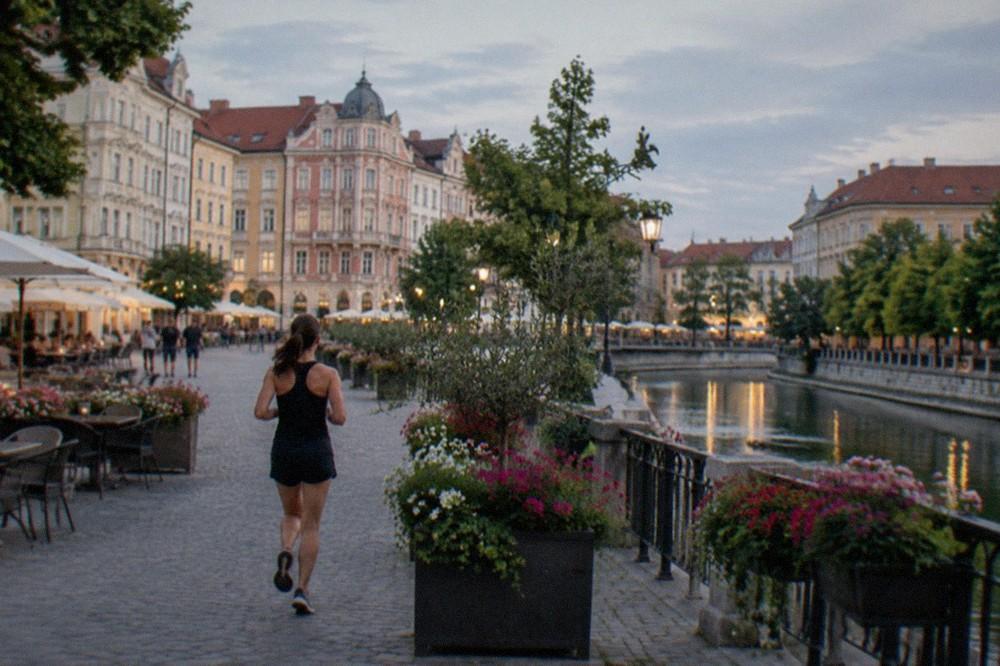
Atmospherically, Timisoara is calmer and more ordered. The Bega canal runs through the center, and its banks are a green corridor with parks and a seasonal water bus. Cluj is faster, denser, more student-driven. Neither is "better"; they suit different travelers, and anyone torn between them should read up on what Timisoara is known for before deciding.
What Does It Cost To Visit Timisoara Compared With Cluj?
Timisoara is inexpensive by western European standards: a 60-minute public transport ticket costs 5 lei, a day pass 18 lei, an inexpensive restaurant meal runs about 45 to 50 lei, and a cappuccino about 13 to 15 lei, per September 2026 cost-of-living data. No comparable published figures are available here for Cluj, so treat any cost comparison as directional rather than numeric.
The figures below are Timisoara's own, drawn from cost-of-living aggregators updated in September 2026 and from STPT's published fares. They give a realistic sense of what a Timisoara day costs; a visitor to Cluj should expect the same order of magnitude, but this site does not publish numbers it has not verified for that city.
| Everyday item in Timisoara | Typical price (RON) | Source type |
|---|---|---|
| 60-minute public transport ticket, all modes | 5 | Operator published fare |
| 1-day pass, includes the Bega water bus | 18 | Operator published fare |
| Inexpensive restaurant meal | 45-50 | Cost-of-living aggregator, Sep 2026 |
| Cappuccino in a central cafe | 13-15 | Cost-of-living aggregator, Sep 2026 |
| 0.5 L domestic draught beer in a pub | 11-12 | Cost-of-living aggregator, Sep 2026 |
| Mid-range hotel night | roughly 176-227 | Aggregator estimate, varies by season |
Two Timisoara-specific money notes matter. First, Romania's currency is the Romanian leu (RON), not the euro; the guide to Romanian currency covers practical use. Second, the city levies a tourist tax, the "taxa speciala pentru promovarea turistica," collected by your accommodation; the rate is reported as 2% of the accommodation tariff excluding VAT under the local council's 2026 decision, and it is collected by the lodging, not by you at a desk.
Accommodation is where the two cities may differ most in feel, though not necessarily in price. Timisoara's hotel scene has grown quickly: a Radisson Individuals property opened in the Baroque old town in June 2026, and a Courtyard by Marriott began construction in March 2026. The where to stay in Timisoara guide maps the neighborhoods, and Timisoara's cost and prices goes deeper than this table.
Is Timisoara Easier To Reach Than Cluj?
Timisoara is strongly connected for a city its size: Traian Vuia Airport (TSR) handled a reported 1,458,098 passengers in 2025, up 10.2% on 2024, with new 2026 routes including Turkish Airlines from Istanbul from 1 April and Wizz Air to Berlin, Birmingham, and Prague; the airport is about 12 km northeast of the center on express bus E4. Cluj also has a significant airport, but this site publishes no figures for it.
The airport numbers above are reported by the Romanian Airports Association via press summaries, so treat them as attributed rather than official statistics. What is directly verifiable is the ground connection: STPT's express line E4 runs between the Bastion and the airport, using the same 5 lei ticket as the rest of the network, and the airport to city center guide covers every option. One planning note for late 2026: a full runway closure for repairs has been reported for 2 to 22 November 2026, announced on the airport's own site in July 2026, so anyone flying in that window should confirm their flight.
| Timisoara connection | Detail | Status |
|---|---|---|
| Airport to center | About 12 km northeast, express bus E4 | GROK-sourced distance; E4 verified at stpt.ro |
| Airport passengers 2025 | 1,458,098 (+10.2% on 2024) | Reported via Romanian Airports Association press |
| New routes 2026 | Istanbul (1 Apr), Berlin, Birmingham, Prague, Athens | Reported, announced late 2025 and early 2026 |
| Train to Budapest | Direct, about 5.5 hours, reported twice daily | Aggregator-reported, not a published CFR fact |
| Train to Bucharest | About 11 to 12 hours direct IR | CFR itinerary page verified, duration GROK-sourced |
| Train to Belgrade | No direct service currently | Reported; resumption talks August 2026, nothing running |
| Airport rail link | Contract signed 28 August 2025, roughly 30-month build | Reported |
The international position is where Timisoara is genuinely distinctive. Romania has been a full Schengen member since 1 January 2025, so the Hungarian border is now an internal one with no routine checks, and Budapest is a direct train ride away. Serbia, by contrast, remains an external Schengen border with passport checks at crossings such as Jimbolia and Moravita, and the EU's EES entry/exit system has been fully operational at all external borders since 10 April 2026. Cluj sits deeper inside Romania, closer to the Transylvanian interior, which is an advantage for castle country and a disadvantage for border-hopping.
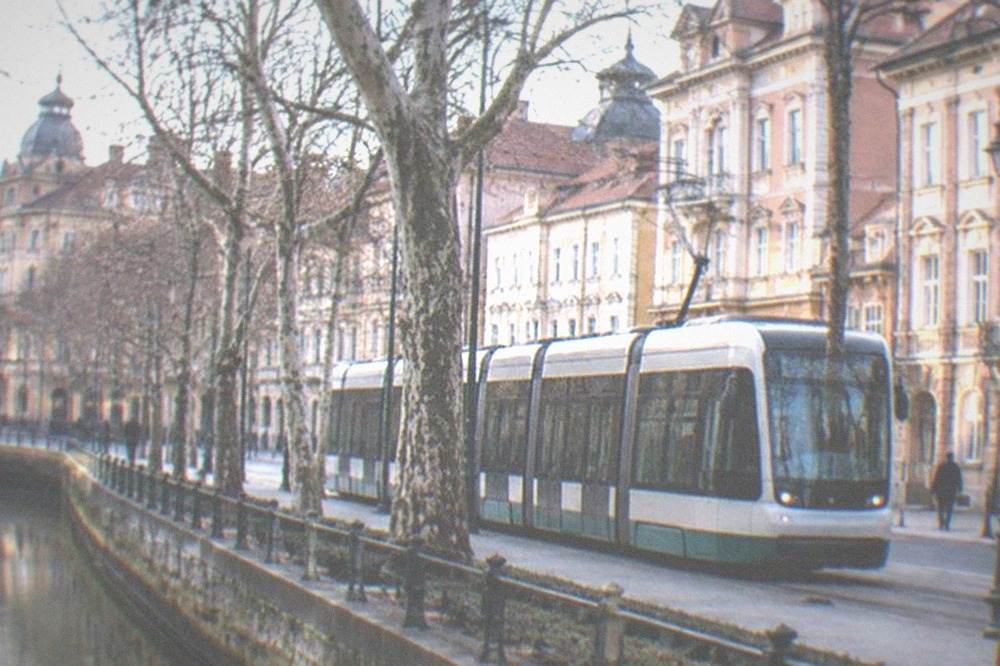
Within the city, Timisoara's transport is simple: trams, trolleybuses, buses, and a seasonal water bus on the Bega, all on one ticket, payable by contactless card on board. The getting around Timisoara guide has the full picture, including the current tram diversions around Piata Traian, which run to the end of 2026.
How Does The Weather Compare Between Timisoara And Cluj?
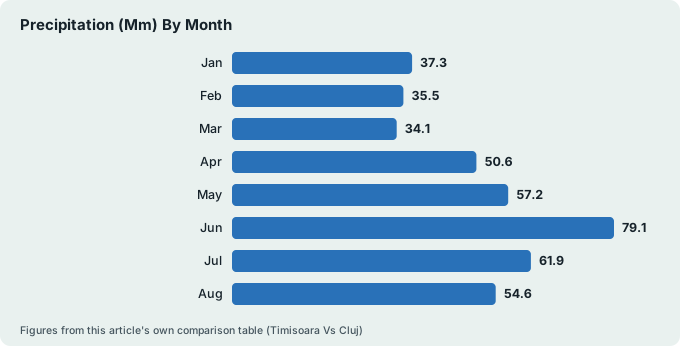
Timisoara has a continental climate with a July mean of 22.8 C and a January mean of 0.0 C, and annual precipitation of 600.7 mm, wettest in June at 79.1 mm and driest in March at 34.1 mm, per the JMA/WMO normals for station Timisoara 15247. No verified climate figures are published here for Cluj, though its inland Transylvanian position gives it a similar continental pattern.
The table below is Timisoara's verified climate record, month by month. Anyone comparing should note that both cities are inland and continental; neither is Mediterranean or coastal, and summer heat and winter cold are real in both.
| Month | Mean temp (C) | Precipitation (mm) |
|---|---|---|
| Jan | 0.0 | 37.3 |
| Feb | 2.1 | 35.5 |
| Mar | 6.5 | 34.1 |
| Apr | 12.3 | 50.6 |
| May | 17.3 | 57.2 |
| Jun | 20.9 | 79.1 |
| Jul | 22.8 | 61.9 |
| Aug | 22.5 | 54.6 |
| Sep | 17.2 | 50.4 |
| Oct | 11.5 | 50.0 |
| Nov | 6.4 | 45.3 |
| Dec | 1.5 | 44.7 |
Practically, this means May through September are the comfortable months in Timisoara, with June the wettest single month, and December visits are cold but brightened by the Christmas market in Piata Victoriei, whose 2026 dates are estimated rather than confirmed until the city announces them. The best time to visit Timisoara guide translates the climate table into actual planning advice.
Where Should You Stay: Timisoara Or Cluj?
Stay in Timisoara's Cetate district if you want every major square within a ten-minute walk, in Iosefin or Elisabetin for quieter period streets close to the center, or near Iulius Town for modern hotels and shopping; the city's hotel stock grew again in 2026 with a Radisson Individuals opening in the old town. Cluj offers its own central options, but this site publishes no verified specifics for them.
Timisoara's neighborhoods divide cleanly. Cetate is the old town, the baroque core around Piata Unirii, and it is the district that travelers tend to choose. Iosefin and Elisabetin are 19th-century residential quarters with cheaper stays and good tram links. Fabric, east of the center, is the up-and-coming district, and its regeneration plans include completing the Bega promenade. The hotels guide and the neighborhood-by-neighborhood breakdown cover the options in detail.
One Timisoara caveat worth planning around: Huniade Castle, the city's oldest monument, has been closed to the public for roughly two decades, and its restoration contract was signed in August 2025 with partial reopening targeted for 2027 and full reopening for 2028. Anyone booking a stay on the strength of "castle" imagery should know that particular castle is a construction site for now.
Which City Wins For Food, Nightlife, And Day Trips?
Timisoara wins on day trips if your interests run to the Banat: the Danube gorges, Nera Gorge waterfalls, the Bigar waterfall, and even Belgrade or Novi Sad across the Serbian border are all reachable, and the city's own food scene is anchored by Banat cuisine and a growing craft beer scene. Cluj wins if your day trips are Transylvanian castles. On food and nightlife, both cities eat and drink well and cheaply.
The day-trip calculus is the clearest differentiator. From Timisoara, the Banat region opens up: the Danube gorges, the Nera Gorge, the spa town of Baile Herculane, and the Recas winery are all realistic outings, and several are covered by bookable tours, including a two-day Banat itinerary. Cross-border trips to Novi Sad and Belgrade are feasible by bus, with no direct train to Belgrade currently.
From Cluj, the obvious day trips are Transylvanian: castles, salt mines, and mountain towns. That is a genuinely great list, and a traveler whose heart is set on Transylvania should not be talked out of it. The trip between the two cities is itself covered on this site, and a week split between them is the answer many travelers land on.
On food, Timisoara's scene is smaller than Cluj's but distinctive: Banat cuisine reflects the same multicultural history as the city's churches, and the restaurants and food guides on this site map the best of it. Nightlife clusters in Cetate and Elisabetin; the nightlife guide has the specifics.
The Honest Verdict For A Traveler Choosing Between Them
Choose Timisoara for a compact, walkable city with a singular historical story, multicultural Banat character, a canal running through the center, and easy reach into both the Banat hills and Serbia; choose Cluj for scale, student energy, and Transylvanian surroundings. If you have a week, do both, and if you have a weekend, pick the one whose story actually pulls at you.
The comparison in one line: Cluj is a bigger city you visit for Transylvania; Timisoara is a specific city you visit for itself. Its 1989 story, its three-language theatre tradition, its first-in-Europe lighting history, and its position on the edge of the Banat are not things Cluj offers, and Cluj's medieval core and mountain backdrop are not things Timisoara offers. Both are safe, affordable, and welcoming by the standards of the region; the safety guide and the Romania travel essentials page cover the practicalities for the Timisoara side.
If this comparison has tipped you toward Timisoara, start with the full things to do page and build outward from there.
Common Questions About Timisoara Vs Cluj
Is Timisoara or Cluj better for a first trip to Romania?
For a first trip focused on one city, Timisoara is easier to absorb in a weekend: its historic core is compact, its revolution story gives the visit a clear narrative, and its squares, churches, and canal promenade sit within walking distance of each other. Cluj suits travelers whose first trip is really about Transylvania. Neither is a wrong choice.
Is Timisoara cheaper than Cluj?
No verified price comparison is published on this site, because its research covers Timisoara only. What is verified for Timisoara: a 5 lei transport ticket, an 18 lei day pass, roughly 45-50 lei for an inexpensive meal, and 13-15 lei for a cappuccino, per September 2026 data. Cluj is broadly similar in cost order, but check current prices there independently.
Which city has better weather, Timisoara or Cluj?
Both have continental climates with warm summers and cold winters. Timisoara's verified normals show a July mean of 22.8 C and a January mean of 0.0 C, with 600.7 mm of annual precipitation. This site publishes no verified climate figures for Cluj, so no numeric comparison is made.
Can you visit both Timisoara and Cluj on one trip?
Yes, and many travelers do. The two cities are connected by Romania's rail and road network, and this site's own guide to the route covers the practical options. A week split between the two, with two or three days in each and a day of travel or a stop in between, is a realistic and rewarding itinerary.
Is Timisoara worth visiting instead of Cluj?
Timisoara was named Romania's Destination of the Year 2026, recorded 296,199 tourist arrivals in 2025, and carries a history no other Romanian city shares: the 1989 Revolution began here. If revolution history, Habsburg multiculturalism, and Banat day trips appeal to you more than Transylvanian castles, it is not a consolation choice, it is the better one.