Timisoara Christmas Market
The Timisoara Christmas Market turns the city's baroque squares into a winter scene of wooden stalls, mulled wine and lights, and this guide covers what to expect, what to eat and how to plan the trip.
Short answer
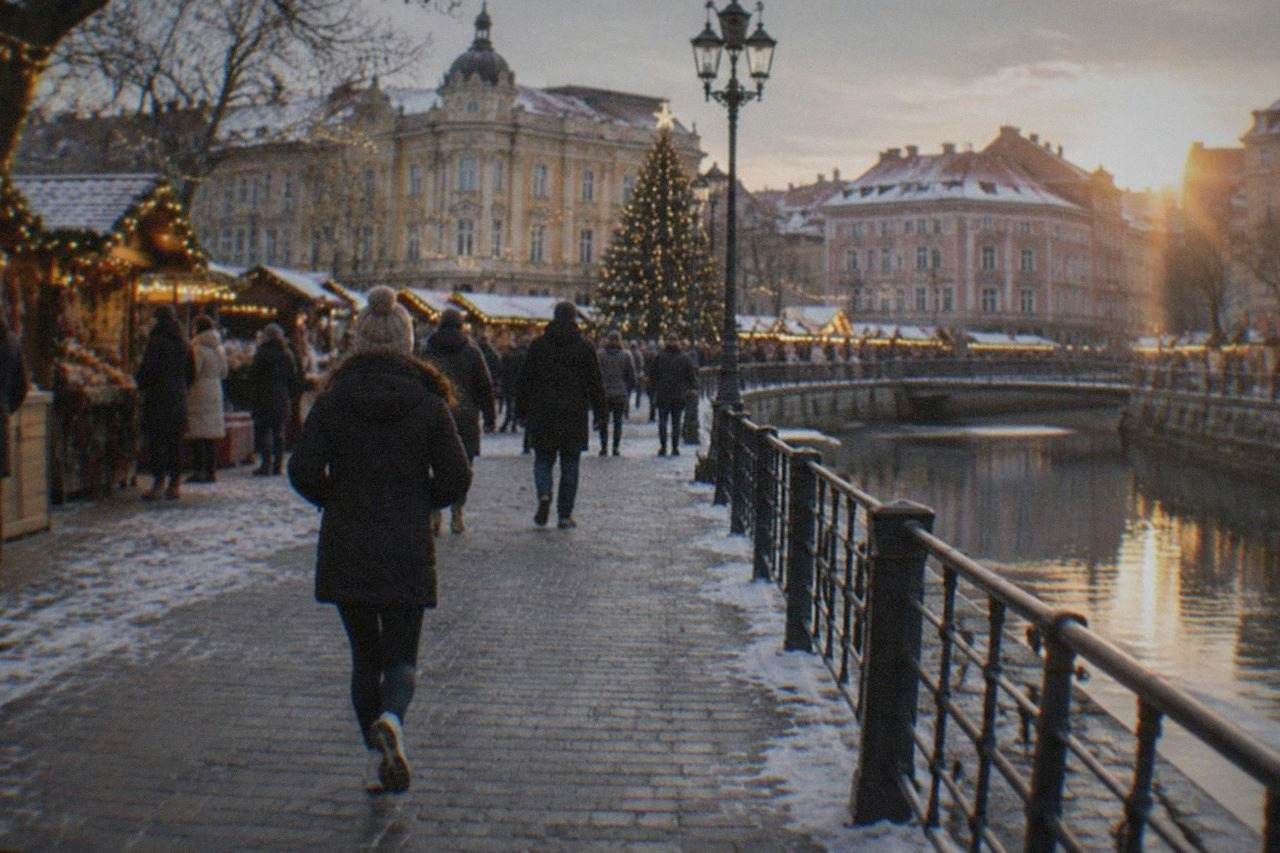
The Timisoara Christmas Market is held in and around Piata Victoriei in the city center, typically from late November into early January. Expect crafts, mulled wine, Romanian winter dishes and a light-dressed old town.
Timisoara, the Banat region's largest city in western Romania, hosts its Christmas market each winter across the baroque squares of the old town, with Piata Victoriei as the traditional heart of it. The 2026 edition's exact dates had not been announced currently, so treat the annual pattern, late November into early January, as the planning window and confirm before booking travel. Timișoara's Christmas season is compact, walkable and cheaper than the better-known markets of Central Europe, which is exactly why it rewards a bit of planning.
Where Is The Timisoara Christmas Market Held?
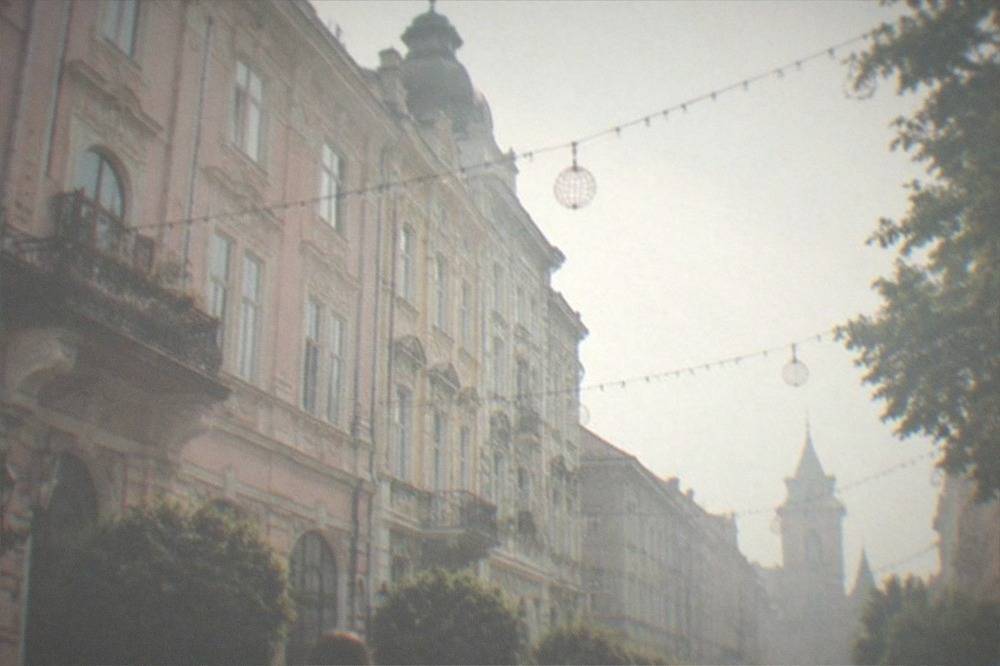
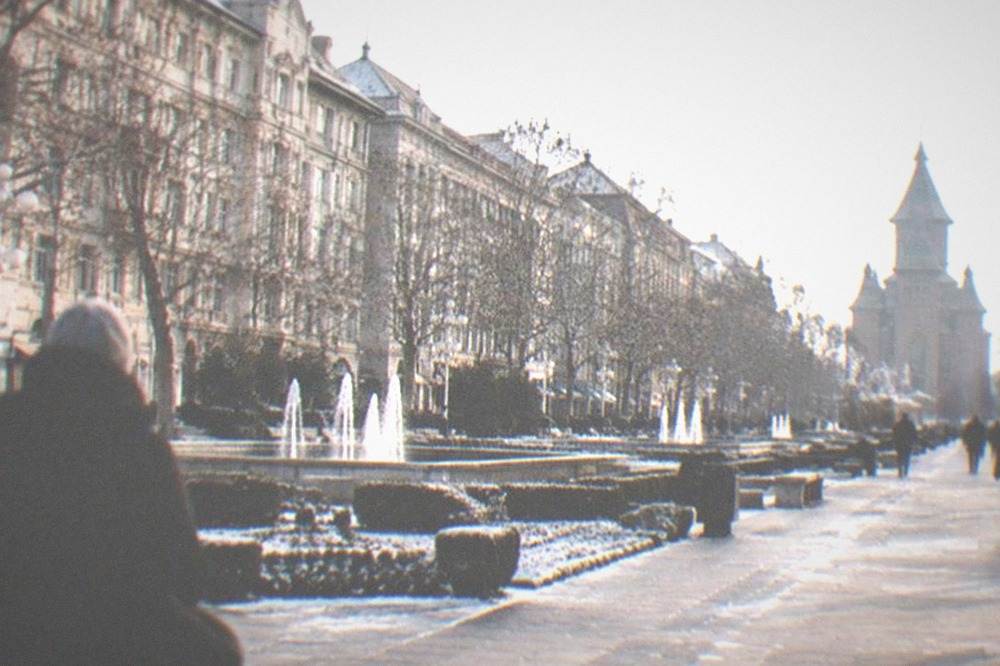
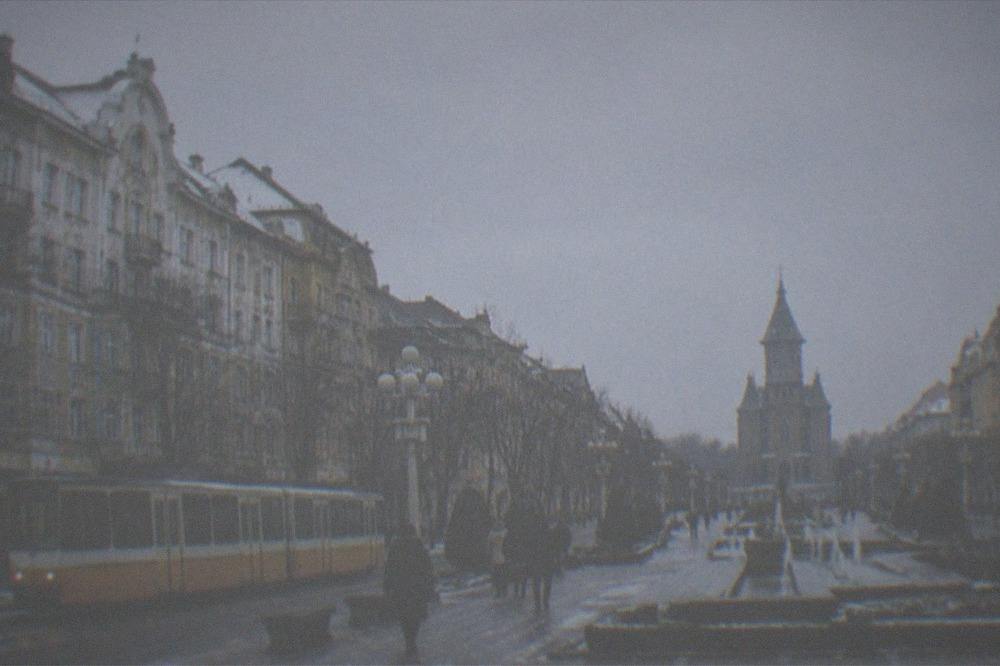
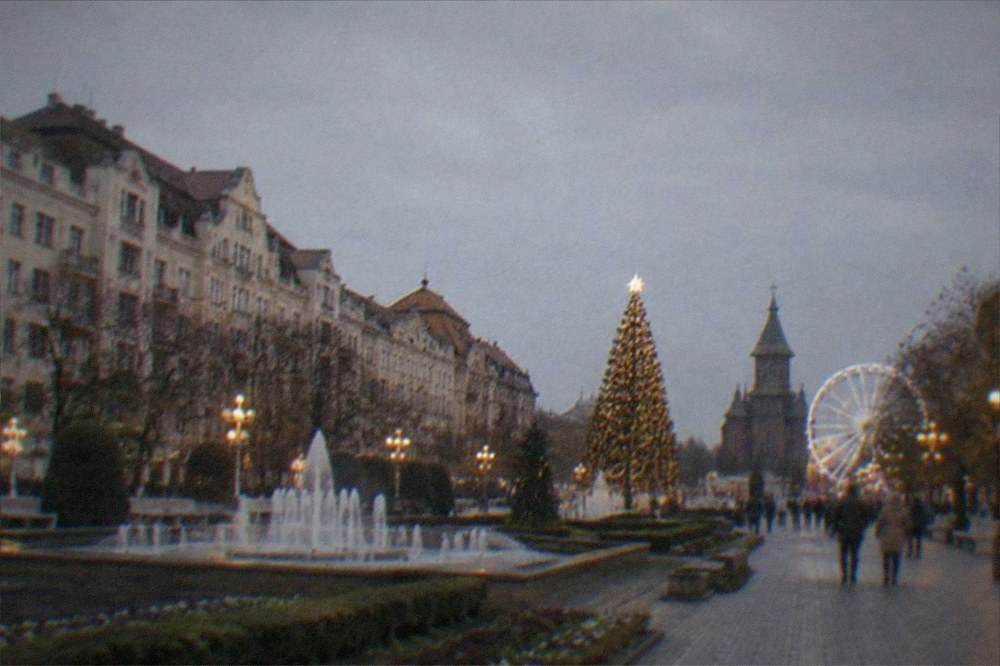
The Timisoara Christmas Market centers on Piata Victoriei, the long rectangular square where the Romanian National Opera and the Metropolitan Orthodox Cathedral face each other, with stalls, the tree and light installations spreading through the surrounding Cetate old town lanes to Piata Unirii, whose baroque facades add their own decoration, making the market a walkable circuit rather than a single pitch. Piata Unirii, the baroque showpiece a few minutes' walk away, and other central spots have historically carried part of the program, so the market is best understood as a circuit rather than a single pitch. Everything sits within the Cetate old town, flat and walkable, and the whole stretch from one end to the other takes well under half an hour on foot. The 2026 dates were unannounced and the city confirms each edition's window closer to the season.
Piata Victoriei carries particular weight in December. The square is where the 1989 Revolution played out in front of the Opera, and the annual commemoration events in mid-December, typically around 15 to 20 December, run alongside the festive program. A winter visit therefore mixes two moods: the lights and stalls, and the candles and ceremonies. The 1989 Revolution guide covers that history in detail.
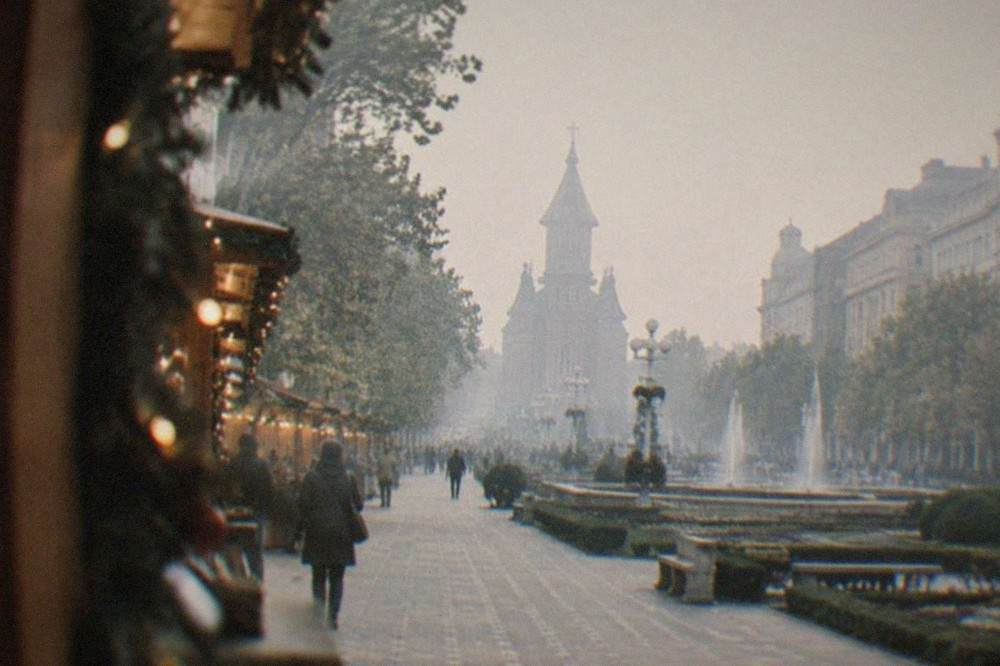
The circuit shape matters for planning. Arrive at Piata Victoriei for the biggest concentration of stalls and the tree, drift into Cetate's lanes, and end at Piata Unirii, where the baroque facades do a lot of the decorative work on their own. Nothing about the layout requires transport: trams run along the edges of the center, but the market itself is a walking experience, and the getting around Timisoara guide explains the tickets if you plan to use them anyway.
| Square or area | Role in the Christmas season | What to expect |
|---|---|---|
| Piata Victoriei | Main market site | Stalls, tree, lights, stage program |
| Piata Unirii | Baroque backdrop and satellite stalls | Craft stalls, cafe terraces, architecture |
| Cetate old town lanes | Connecting circuit | Decorated streets, shops, restaurants |
| Piata Libertatii | Occasional installations | Smaller light displays, quieter corners |
What Can You Eat And Drink At The Timisoara Christmas Market?
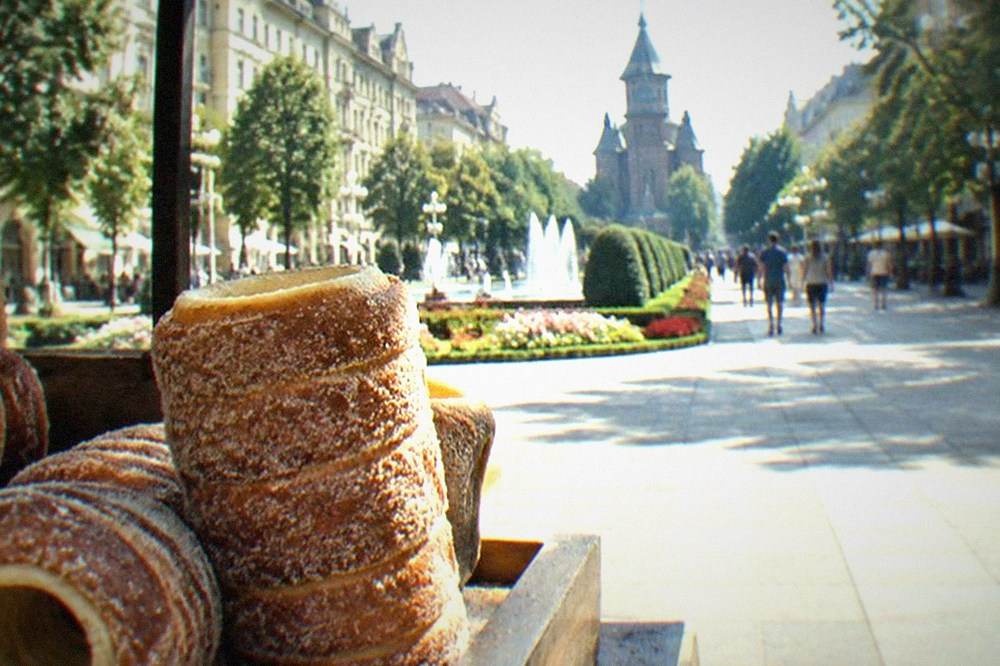
The Timisoara Christmas Market food stalls lean on Romanian winter cooking: grilled sausages called mici, sarmale (cabbage rolls stuffed with pork and rice), gulas served in bread bowls, kürtőskalács chimney cakes, and hot tuica or mulled wine to drink, plus the Banat's own pastry traditions brought by the city's German, Hungarian and Serbian communities. Ordering works counter-service at nearly every stall: point, pay in Romanian lei, and eat standing at high tables or on the move. No stall's prices were verified for this guide, so check the boards on site, and expect cash and contactless both to be usable in the center.
The Banat context is what separates Timisoara's stalls from generic European markets. This was a Habsburg city under its Hungarian name, Temesvár, and the region's cooking shows it: paprika-heavy stews, Austrian-style pastries and Serbian grilled meats all appear. The Timisoara food guide maps the dishes, and the restaurants guide is the better tool for sit-down dinners between market visits, since the stalls are more about grazing than meals.
Drinks deserve a note. Mulled wine is the default, usually offered in souvenir mugs with a deposit, and tuica, the local plum spirit, appears in both straight and hot versions. Beer in the neighborhood of 11 to 12 lei a half-liter and a cappuccino around 13 to 15 lei were the typical city figures in September 2026 cost-of-living data, but market stall pricing is its own thing, so treat those as background orientation only. The cost and prices guide holds the fuller budget picture.
| Dish or drink | What it is | How it's served at the market |
|---|---|---|
| Mici | Skinless grilled sausages with garlic and spices | In a bun with mustard, eaten standing |
| Sarmale | Pickled cabbage rolls with pork and rice | Hot from the pot, often with polenta |
| Gulas | Paprika beef stew | In a hollowed bread bowl |
| Kürtőskalács | Chimney cake spun from sweet dough | Cinnamon or walnut sugar coating |
| Mulled wine | Hot spiced wine | Souvenir mug with deposit |
| Tuica | Plum brandy | Small pour, straight or hot |
Which Guided Tours Pair Well With The Timisoara Christmas Market?
A guided walk is the most natural companion to the Christmas market, because the stalls sit in squares that carry two centuries of history, and a private walking tour with a local guide covers the old town's story in roughly two and a half hours, leaving the evening free for the lights. Timisoara's compact center means a tour and a market visit fit easily into one day, and December's shorter daylight makes a morning or early-afternoon tour the practical choice. Beyond the city, winter day trips into the Banat and toward Transylvania's castles also run, weather permitting.
The trio above spans the useful range for a winter stay: the private walk for the city itself, the Oradea and Apuseni caves trip for a full day out, and the Corvin Castle and Sibiu run for the castle-and-cities combination. All three leave from the city, and all three fit the season as long as you dress for it.
The private walk is the one to book if the history matters as much as the stalls. Piata Victoriei is not just the market's home, it is the square where the 1989 Revolution began in public, and a guide who knows the city can connect the December commemorations, the electric-lighting firsts and the Habsburg street plan into one story while you walk it.
What Else Can You Do In Timisoara In Winter?
Winter in Timisoara means the Christmas circuit plus the city's indoor culture: the National Museum of Art in the Baroque Palace on Piata Unirii, the Memorial of the 1989 Revolution, the cafes of the Cetate old town, and the trams and waterbus infrastructure of a city that was continental Europe's first with electric street lighting, back on 12 November 1884. Days are short and the mean temperature sits near freezing in December and January, so the rhythm is museums and cafes by day, lights and stalls by night. The Christmas in Timisoara itinerary sequences a full seasonal stay day by day.
The museum picture has moving parts worth knowing before a winter trip. Huniade Castle, the National Museum of Banat's home, has been closed for years with restoration under way and partial reopening targeted for 2027, so it is not part of a winter visit yet. The Art Museum, by contrast, has stayed open through its own rehabilitation planning and hosted major exhibitions into 2026, including a Pompeii-themed show that ran from late November 2025 into early May 2026.
Two 2026 openings added indoor options that did not exist two winters ago: MINA, the immersive art museum in Iulius Town, opened in April 2026, and the MIC children's interactive museum opened in May 2026 inside the Maria Theresia Bastion. Families get real value from that second one, and the city's parks and playgrounds round out a winter trip for younger visitors. For evenings, the craft beer bars and the student quarter around Complex Studentesc keep the city lively after the market stalls close.
| Winter day in Timisoara | Morning | Afternoon | Evening |
|---|---|---|---|
| Day 1 | Private or group walking tour of the old town | Art Museum on Piata Unirii | Christmas market in Piata Victoriei |
| Day 2 | Memorial of the 1989 Revolution | Cafes and shops in Cetate | Market circuit and mulled wine |
| Day 3 | MINA immersive museum, Iulius Town | Tram ride and riverside walk | Dinner in the old town, lights in Piata Unirii |
How Cold Is Timisoara At Christmas, And What Should You Pack?
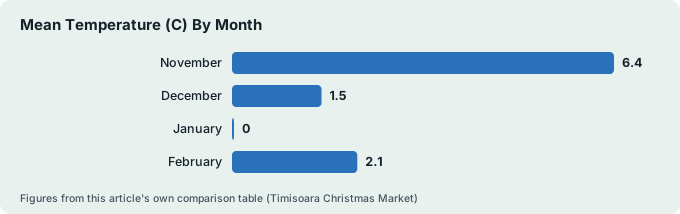
Timisoara's climate is continental, and the JMA climate normals for the city's weather station give a January mean of 0.0 C and a December mean of 1.5 C, with December precipitation averaging 44.7 mm, so a Christmas visit means proper winter layers, a real coat, gloves and waterproof shoes rather than a fashionable scarf. The market squares are open-air and the wind funnels between the baroque facades, which makes the mulled wine stops less optional than they sound. Snow happens but is not guaranteed; rain and sleet are just as likely in any given December week.
The monthly picture shows the cold tightening through the season: November averages a mild 6.4 C mean, December drops to 1.5 C, and January is the coldest month at 0.0 C. February stays cold at 2.1 C. Anyone extending a market trip into a New Year stay should pack for January, not December.
| Month | Mean temperature (C) | Precipitation (mm) | What it means for visitors |
|---|---|---|---|
| November | 6.4 | 45.3 | Market opening month, chilly evenings |
| December | 1.5 | 44.7 | Full winter kit, lights at their best |
| January | 0.0 | 37.3 | Coldest month, quietest squares |
| February | 2.1 | 35.5 | Still cold, carnival season approaching |
How Much Does A Christmas Trip To Timisoara Cost?
A Christmas trip to Timisoara is inexpensive by Western European market standards: September 2026 cost-of-living data put an inexpensive restaurant meal around 45 to 50 lei, a mid-range hotel night roughly 176 to 227 lei, and a day pass for all public transport including the waterbus at 18 lei, so a comfortable three-night stay lands well below the cost of Vienna or Munich in the same season. Those are citywide planning figures rather than market-specific ones, so treat them as orientation and check the actual listings. The Romanian currency guide explains the leu and how to handle money.
One line item that surprises some visitors is the tourist tax. Timisoara levies a local tourism promotion tax on accommodation, set by council decision for 2026, and it is collected by the lodging at checkout rather than at the market. The rate is reported at 2% of the accommodation tariff excluding VAT, but that figure comes from secondary sourcing rather than a primary document, so expect it to appear as a small item on your hotel bill and let the invoice state the exact amount.
| Expense | Typical planning figure (Sep 2026 data) | Notes |
|---|---|---|
| Inexpensive restaurant meal | 45-50 lei | Citywide average, not market pricing |
| Coffee (cappuccino) | 13-15 lei | Cafe average |
| Beer (0.5 L draught) | 11-12 lei | Neighborhood pub average |
| Mid-range hotel night | 176-227 lei | Varies sharply in market season |
| Public transport day pass | 18 lei | All modes, waterbus included in season |
| Single transport ticket | 5 lei | 60 minutes, all modes |
Accommodation is the line that moves most in December. The where to stay guide breaks down the neighborhoods, Cetate for being inside the circuit, Iosefin and Elisabetin for quieter and often cheaper stays a short walk out. Book early: the city's hotel stock fills fastest in the market weeks, and the best-located properties go first.
How Do You Get To Timisoara For The Christmas Market?
The gateway to the Timisoara Christmas Market is Traian Vuia International Airport (TSR), which handled 1,458,098 passengers in 2025 according to Romanian Airports Association figures, with Wizz Air as the dominant carrier and routes added in 2026 including Berlin, Birmingham, Prague and Istanbul, while direct trains also connect the city to Budapest in about five and a half hours. The airport sits about 12 km northeast of the center, and the airport to city center guide covers the transfer options, including the E4 express bus. The airport guide has the fuller airline picture.
One 2026 detail deserves a flag: the airport announced a full runway closure for repairs from 2 to 22 November 2026, right at the front edge of the market season. If that window has passed by the time you read this it is moot, but anyone booking late-November flights should check the airport's own communications for the status of their date, since the announcement came from the operator and the situation is theirs to confirm.
Arriving overland is straightforward now that Romania is a full Schengen member, with land borders open since 1 January 2025. From Budapest the direct train runs about five and a half hours, and the Timisoara to Budapest guide covers it; from Bucharest, the Bucharest to Timisoara guide lays out train and road options. Serbia, an hour and a half south, remains an external Schengen border, so day-trippers to Novi Sad or Belgrade should carry a passport and expect checks, and the EES entry-exit system has been fully operational at external borders since 10 April 2026.
For getting around once there, a market visit itself needs no car: the circuit is pedestrian, and the trams and buses handle anything beyond walking range. Winter road trips into the Banat hills are a different matter and deserve winter tires and daylight planning.
Is The Timisoara Christmas Market Worth The Trip, Compared With Other Romanian Markets?
The Timisoara Christmas Market earns its trip by combining a genuine baroque old town, a food culture shaped by three historical communities and prices well under the Central European market cities, and Timisoara was named Romania's Destination of the Year 2026 at a national gala in May 2026, which put the city's seasonal offering on more radar screens than ever. The comparison question is a real one, and the which Christmas market is best in Romania answer page makes the head-to-head case across cities. Timisoara's angle is atmosphere plus history: the squares do the decorating, and the 1989 story gives December here a depth that pure-festive markets lack.
The honest sizing is that this is not Vienna's Rathausplatz. The market is smaller, the crowds thinner, and the evenings end earlier. What you get in exchange is a walkable scale where you never queue long, a restaurant and cafe scene that punches above the market's size, and the sense that the city is living its own season rather than performing for tourists. The city's full sightseeing round-up shows how much non-market Timisoara there is to fill the afternoons, from the parks along the Bega to the churches of three denominations facing each other across one square.
Safety is rarely a concern in the center, and the usual city precautions are enough for winter evenings: keep an eye on belongings in the market crowds, use marked taxis or ride apps after dark, and the well-lit central squares stay busy through market hours. For anyone extending the trip, the surrounding Banat countryside opens up day-trip options, and December, cold and festive, is far from the only window worth considering for this city.
Common Questions About The Timisoara Christmas Market
When does the Timisoara Christmas Market start and end?
The market typically runs from late November into the first days of January, centered on Piata Victoriei. The 2026 edition's exact dates were not announced currently, so check the city's or the Visit Timisoara channels for the year you travel rather than relying on prior-year dates.
Where is the Timisoara Christmas Market held?
The main site is Piata Victoriei, with stalls and light installations extending into Piata Unirii and the surrounding Cetate old town lanes. Everything is within flat, walkable distance of the city's central squares.
Is the Timisoara Christmas Market expensive?
By Western European market standards, no. Citywide planning figures from September 2026 put an inexpensive meal around 45 to 50 lei and a mid-range hotel night roughly 176 to 227 lei, though no market stall or venue price was verified for this guide, so check prices on site.
What should you wear to the Timisoara Christmas Market?
Full winter gear. The December mean temperature is 1.5 C and January's is 0.0 C per the city's climate normals, and the open squares funnel wind between the facades. A proper coat, gloves, a hat and waterproof shoes make the evening circuit far more enjoyable.
Can you combine the Christmas market with sightseeing in Timisoara?
Yes, easily. The market sits inside the old town, so the National Museum of Art, the Memorial of the 1989 Revolution, the cafes of Cetate and a guided walking tour all fit around the evening market hours, and the days are short enough that indoor culture fills the afternoon naturally.
Is Timisoara easy to reach in winter?
Yes. Traian Vuia Airport served over 1.4 million passengers in 2025 with a growing route network, direct trains connect to Budapest in about five and a half hours, and Romania's land borders have been open Schengen internal borders since 1 January 2025. Anyone flying in late November 2026 should check the airport's runway closure announcement for their date.
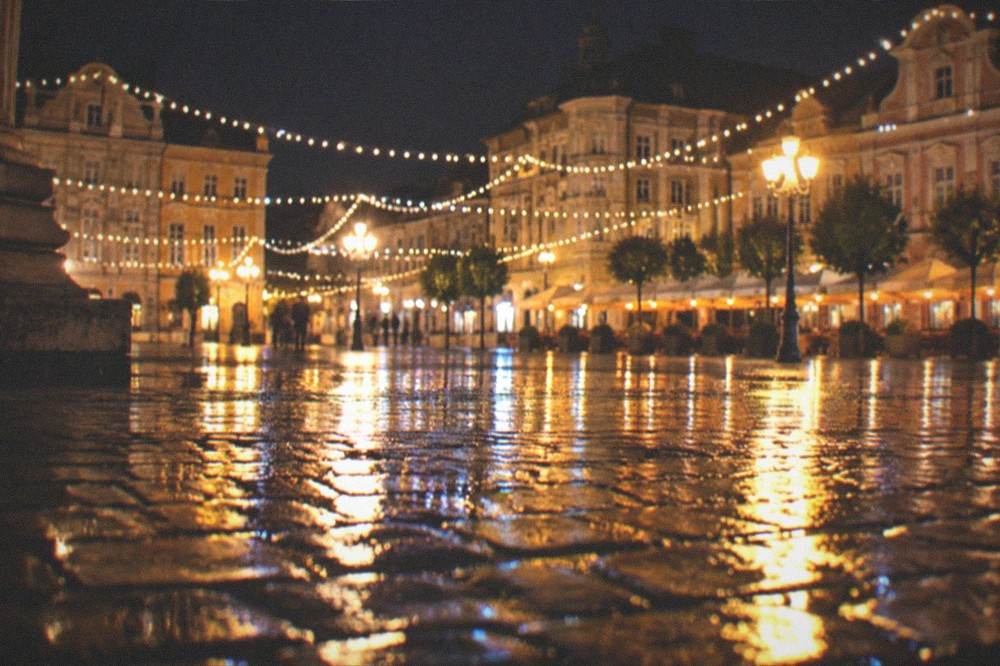
The Timisoara Christmas Market is at its best when treated as one layer of a winter city break: the stalls and lights by evening, the museums and history by day, and a food scene that carries three cultural traditions in a single square mile. Confirm the dates for the year you travel, pack for continental winter, and let the baroque facades do half the work. This Timisoara Travel Guide and its seasonal pages cover everything else the city offers in December and beyond.