Timisoara History
Timisoara, in western Romania's Banat region, packs a thousand years of borderland history into a walkable core: a medieval fortress town that became a Habsburg showpiece, the first city on mainland Europe with electric street lighting, and the place where the 1989 Revolution began.
Short answer
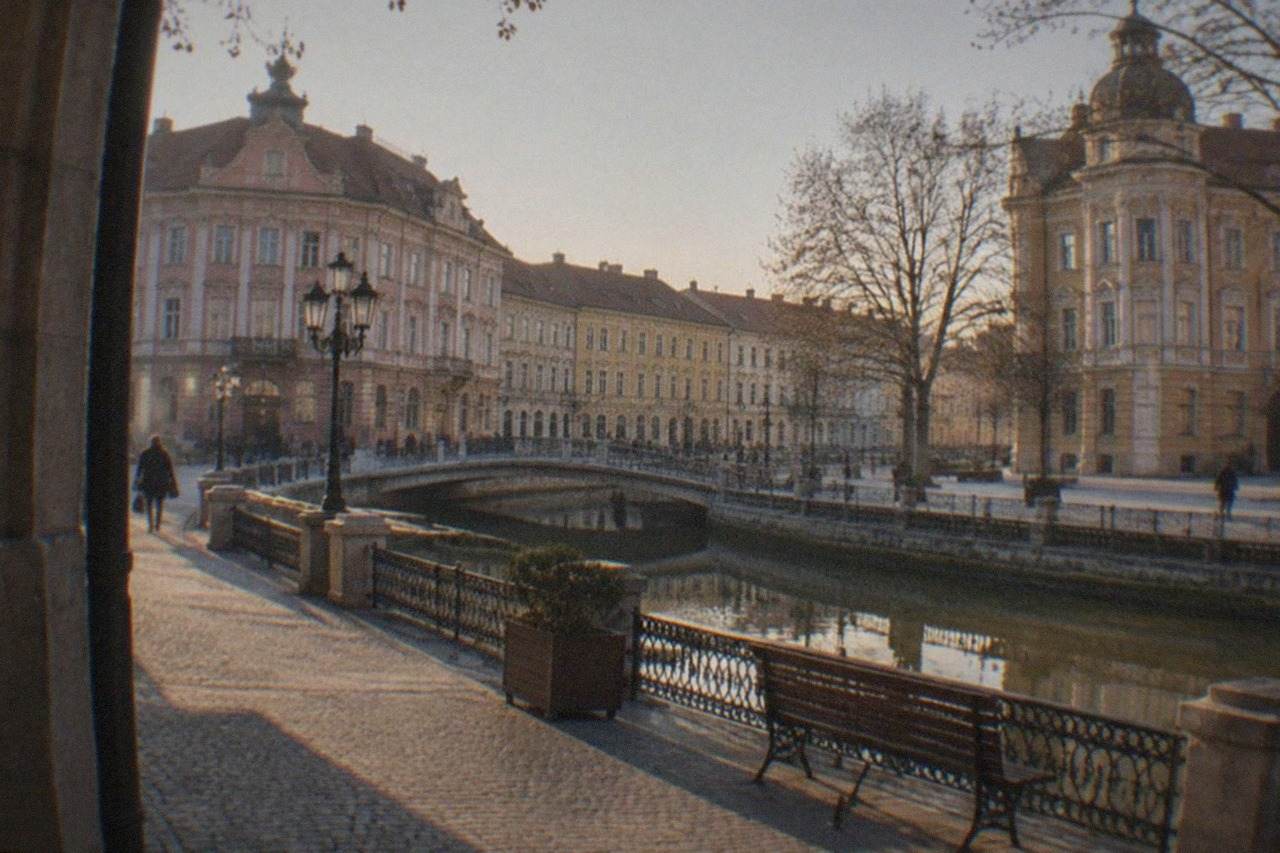
Timisoara's history runs from a medieval fortress on the Bega swamp, through 150 years of Ottoman rule, to Habsburg Temeswar, which pioneered street lighting, trams and telephones, and finally to December 1989, when the uprising that ended communist rule in Romania started here.
Timisoara, in Timis County in the Banat region of western Romania, is one of those rare cities where an entire continent's history converges on a few squares. Known to Hungarian speakers as Temesvar and on old German maps as Temeswar, it sat for centuries on the fault line between the Hungarian kingdom, the Ottoman Empire and the Habsburg monarchy, and each of those powers left something behind: a street plan, a church, a brewery, a nickname. Under its current Romanian name, Timișoara, the city later became a laboratory of technology, then the cradle of the revolution that ended communism in Romania. This page tells that whole story in order, and points to the squares, museums and guided walks where each chapter is still visible today.
Where Does The History Of Timisoara Begin?
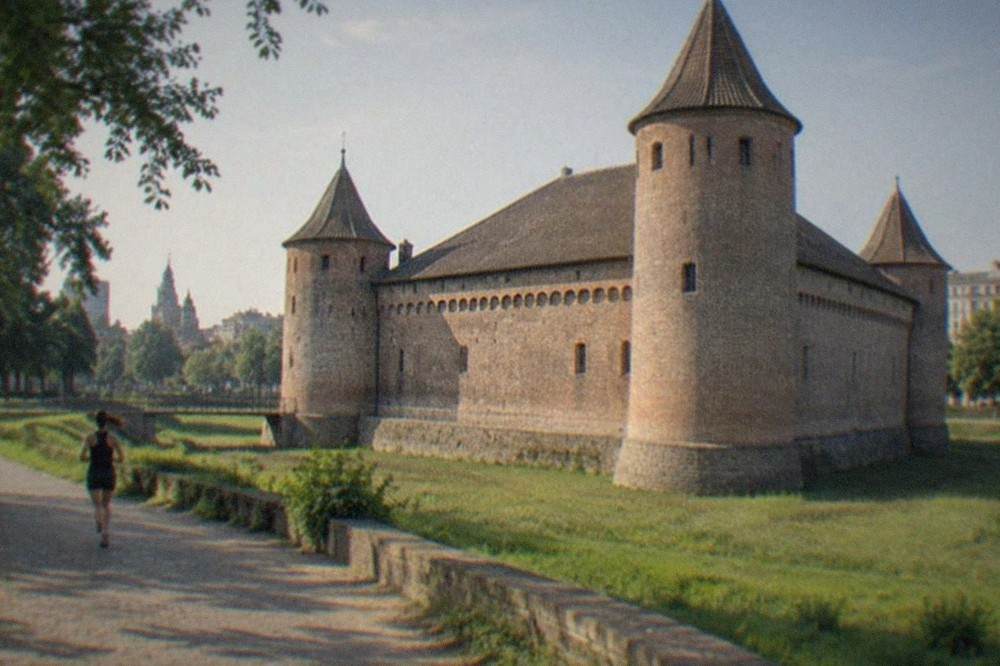
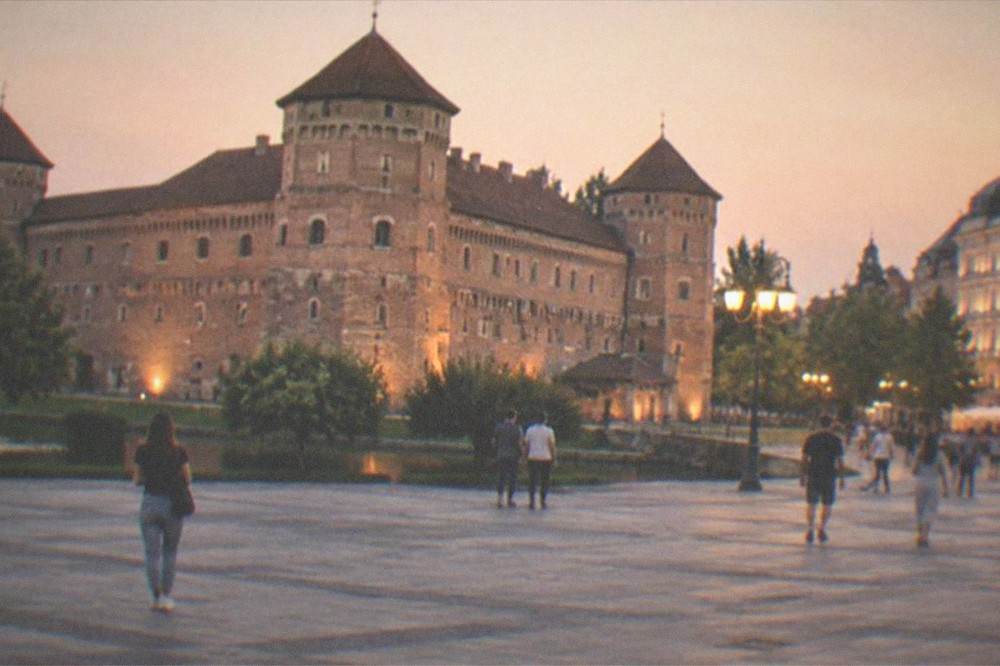
Timisoara's documented history begins as a medieval fortress in the marshes of the Bega river, first mentioned in Hungarian royal charters in the thirteenth century, when it guarded the southern edge of the Kingdom of Hungary. Its position on the swamp made it nearly untakeable by siege, a fact that shaped every later chapter, and its castle, today's Huniade Castle, is the oldest standing monument in the city.
The fortress town grew around that castle. For roughly three centuries it belonged to the Hungarian crown, and its population was already mixed: Hungarian garrisons, Romanian villages in the surrounding plain, and later Serbian settlers moving north from the Balkans. That mix is not a modern invention, it is the city's founding condition, and it explains why Timisoara would eventually sustain Romanian, Hungarian, German and Serbian institutions side by side.
The decisive break came in the early eighteenth century, when the Habsburg army under Prince Eugene of Savoy took the city after a long siege. The capture is remembered as the moment the Banat passed to Vienna's control, and although no primary source survives for an exact calendar date, the event itself is solid history. What followed reshaped everything: the marshes were drained, the Bega was canalised starting in 1728 to become the first navigable canal in Romania, and the old medieval walls were replaced by a star-shaped baroque fortress of the kind Vienna's military engineers built across the empire.
Who Ruled Timisoara Before It Became Romanian?
Before the First World War, Timisoara never belonged to a Romanian state. It passed from the medieval Kingdom of Hungary to the Ottoman Empire for about a century and a half, then to the Habsburg monarchy for two hundred years, and only joined Romania after the First World War, when the Banat region was divided among the successor states. Each ruler stamped the city with its own architecture, administration and language.
The Ottoman period, from the mid-sixteenth to the early eighteenth century, turned the fortress into the capital of a border province. Mosques and bazaars appeared inside the walls, and the city's role shifted from a Christian border fort to an imperial outpost of Istanbul. Almost nothing of that era survives above ground today, which makes the Habsburg layer that replaced it all the more visible.
Habsburg rule was the era that made modern Timisoara. Vienna needed a loyal, modern, German-speaking administrative center at the edge of its empire, and it built one. The three historic districts that every visitor walks today, Cetate, the walled core, plus Fabric, Iosefin and Elisabetin, all took their character in the eighteenth and nineteenth centuries. Settlers arrived from across Europe: German colonists, Serbian merchants, Hungarian administrators, and the city earned the nickname "Little Vienna" in common usage, a phrase locals still use, though it has never been an official designation.
The First World War ended Habsburg rule. The Banat was claimed by Romania, and the postwar settlement awarded the larger part, including Timisoara, to the Romanian kingdom. The city's German and Hungarian communities stayed, and the multi-lingual character persisted. In 1953, under the communist regime, Timisoara became the only European city with three state theatres, performing in Romanian, Hungarian and German, a fact the city hall still lists among its proudest firsts.
| Period | Ruling Power | What It Left Behind |
|---|---|---|
| 13th century to mid-16th century | Kingdom of Hungary | Huniade Castle, the street pattern of Cetate |
| Mid-16th century to 1716 | Ottoman Empire | Provincial capital status, erased above ground |
| 1716 to the First World War | Habsburg monarchy | Baroque squares, the Bega canal, the historic districts |
| Interwar years | Kingdom of Romania | Romanian administration, union monuments |
| Communist era to 1989 | Communist Romania | Apartment blocks, the 1989 Revolution sites |
| 1989 to today | Democratic Romania | Memorial of the Revolution, Capital of Culture legacy |
For travelers who want the Habsburg chapter explained on the ground, guided walks are the practical option, and the trio below covers the historical core from three different angles.
What Did Timisoara Invent First?
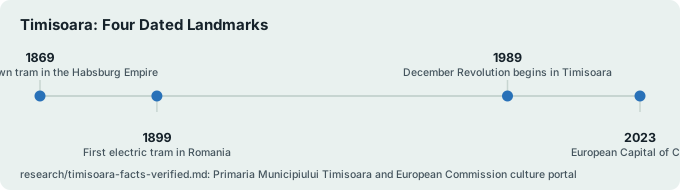
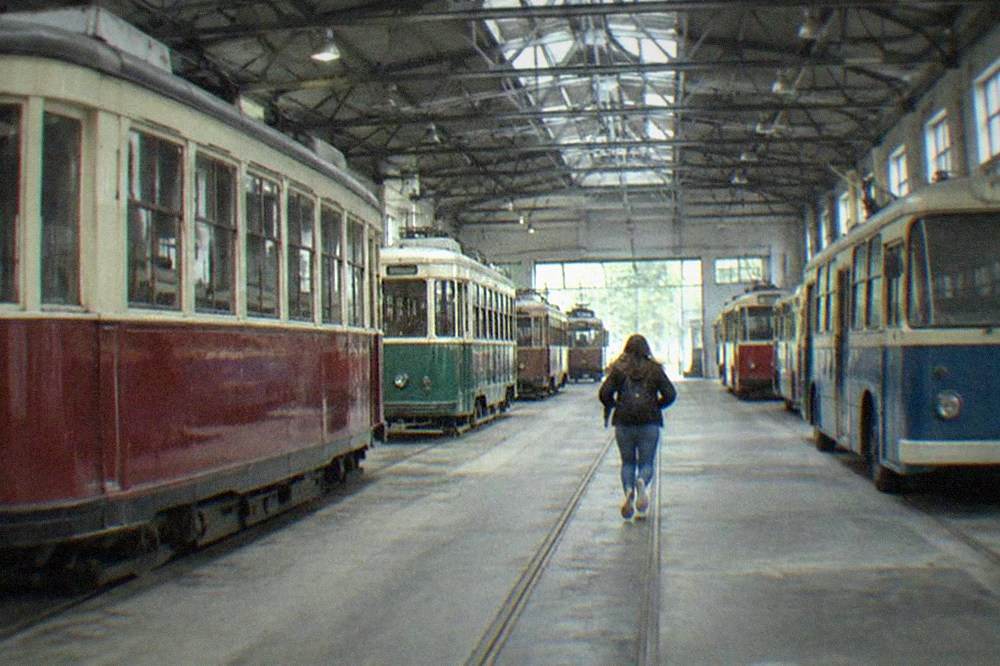
Timisoara was, by the city hall's own verified list of firsts, the first city on mainland Europe with electric street lighting, on 12 November 1884, when 731 incandescent lamps lit 59 km of streets. It also had the first horse-drawn tram in the Habsburg Empire in 1869, the first electric tram in Romania in 1899, and the first telegraph, telephone network and newspaper in the country.
The list is long enough that it deserves a table of its own. What matters is the pattern: this was a provincial city that Vienna, and later Budapest, invested in heavily, and a local elite of German-speaking engineers, brewers and printers turned that investment into a string of technical firsts for the entire region.
| Year | First | Scope |
|---|---|---|
| 1718 | Oldest attested brewery in Romania | Romania |
| 1728 | Canalising of the Bega begins, first navigable canal | Romania |
| 1760 | Lamp-lit streets | First city in the Habsburg monarchy |
| 1771 | First newspaper printed in Romania | Romania |
| 1854 | First telegraph service | Romania |
| 1855 | First gas street lighting | First in the Habsburg monarchy |
| 1869 | First horse-drawn tram, Cetate to Fabric | Habsburg Empire |
| 1881 | First telephone network | Romania |
| 1884 | Electric street lighting, 731 lamps over 59 km | First city on mainland Europe |
| 1899 | First electric tram | Romania |
The 1884 lighting milestone is the one with international weight. The European Commission's own European Capital of Culture page for Timisoara repeats it, and the date, 12 November, is celebrated locally as the anniversary of the moment the city outpaced capitals like Vienna and Berlin on this one narrow measure. The horse tram of 8 July 1869 ran from Piata Sf. Gheorghe in Cetate to Fabric, and was extended that same October to the Josefin railway station, tracing roughly the corridor trams still use.
Several other entries round out the picture: the first ambulance station in Hungary and Romania in 1886, the first asphalted street in Romania in 1895, and the first film projections in Romania in 1897. A city that could claim all of those inside two decades was, by any measure, the technological frontier of southeastern Europe at the turn of the twentieth century.
If the era of firsts is what draws you, a themed walk pins these milestones to actual corners and facades, and the listing below handles the practical side.
Why Is Timisoara Laid Out In Squares And Districts?
Timisoara's layout is a direct read of its military past: the baroque squares of Cetate, Union, Victory and Liberty, were built as the parade and market spaces of a star-shaped Habsburg fortress, while the outer districts of Fabric, Iosefin and Elisabetin were the civilian settlements that grew outside the walls. When the fortress walls came down from 1892 onward, the city simply grew into the gaps.
Union Square, Piata Unirii, was the fortress's main square, and it carries the clearest baroque ensemble in Romania: the Roman Catholic and Serbian Orthodox cathedrals face each other across it, a layout few European cities can match. Victory Square, the city's ceremonial axis, was laid out as a parade ground, and it became the stage of the 1989 Revolution. Liberty Square and the surrounding streets hold the administrative buildings of the Habsburg era.
The demolition decision came in 1892, and the walls began coming down soon after, which is why the ring of parks and boulevards around the center feels so deliberate. It is: the green ring follows the line of the former fortifications. Fabric, to the east, was the workers' and industrial district, Iosefin to the southwest grew along the canal toward the old railway station, and Elisabetin filled in between them as the nineteenth century went on.
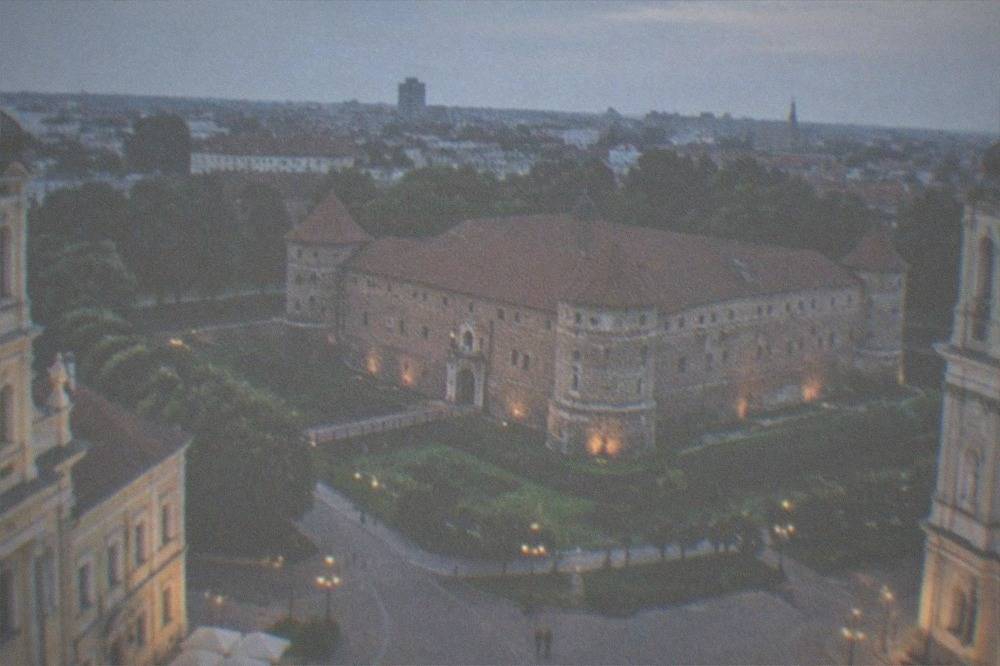
Understanding this geometry is the single biggest unlock for a first-time visitor. Once you know that everything inside the parks was the fortress and everything outside was the suburbs, the city stops feeling like a maze and starts reading like a diagram. Our overview of things to do in Timisoara follows this same structure, and the Banat region guide extends the story into the countryside that fed the fortress for centuries.
What Happened In Timisoara In 1989?
The 1989 Revolution began in Timisoara on 15 to 16 December, when protests around the reformed pastor Laszlo Tokes's parish grew into mass demonstrations against the Ceausescu regime, and by 20 December the city was in open revolt. The uprising spread to Bucharest, and on 25 December 1989 the regime fell, making Timisoara the birthplace of Romania's democracy and earning it the nickname Martyrs' City.
The sequence is well documented by the Memorial of the Revolution, the museum in the former Communist Party building on Victory Square. Protests started mid-December around the Tokes parish in the Fabric district, security forces opened fire, and the funerals and marches that followed drew ever larger crowds into Victory Square. Timisoara declared itself the first free city in Romania days before the capital followed. The rest of the planning pages sit on Timisoara Travel Guide.
The human cost was heavy, and the Memorial's permanent exhibition, eight rooms plus three temporary exhibition spaces and the documentary "Noi nu murim", is the place where it is counted. The museum charges 20 lei for adults, with a 20 lei photography fee, and keeps weekday and weekend visiting hours that are published on its own site. For the full political background, our dedicated page on the 1989 Revolution carries the detailed timeline.
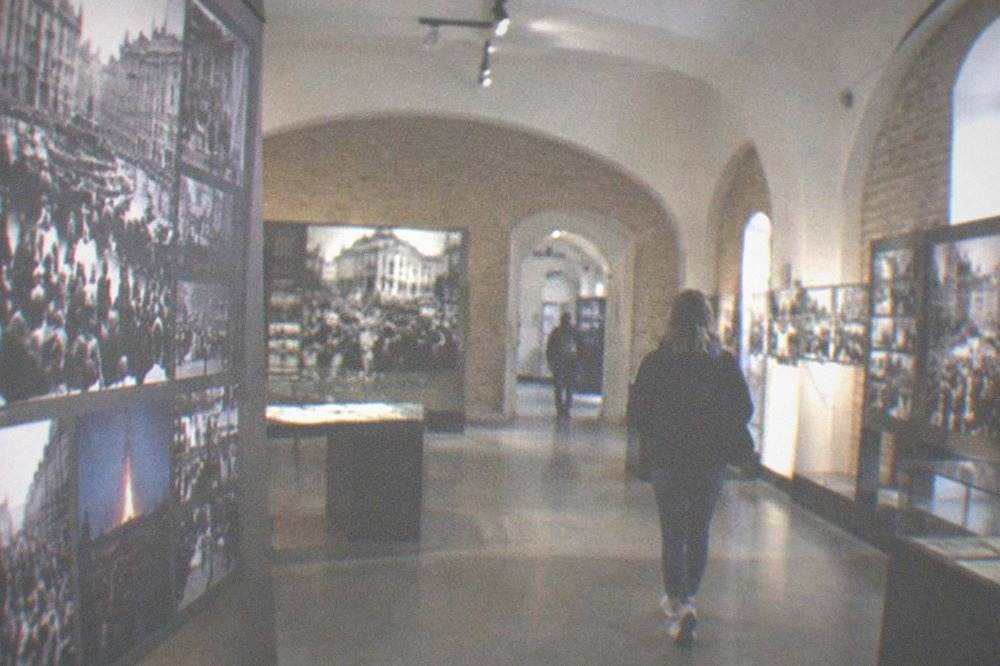
The revolution is the chapter of Timisoara history that visitors tend to arrive already curious about, and it is best understood on the ground, standing in Victory Square where the crowds gathered. The buildings around that square still carry the marks of December 1989, and a guide who knows the sequence of those days can point to each window and each balcony in order, something no plaque or guidebook quite manages.
How Did The 2023 Capital Of Culture Year Change The City?
Timisoara was a European Capital of Culture in 2023, sharing the title with Elefsina in Greece and Veszprem in Hungary, with an opening weekend held from 17 to 19 February 2023. The year accelerated the restoration of historic buildings, pushed visitor arrivals to a record 283,256 in 2023, up from 212,785 in 2022, and left a legacy of cultural institutions and festival infrastructure that still runs today.
The city hall's own figures, citing the national statistics institute, show what the year did for tourism: arrivals jumped by roughly seventy thousand in a single year and have stayed high since, with 285,190 recorded in 2024. The Tourist Information Centre counselled 7,464 visitors in 2023, and the city has since been named Romania's Destination of the Year 2026 at a national tourism gala.
The physical legacy is visible everywhere in the center. Facades that were grey a decade ago are painted in the city's trademark pastels, and the cultural program that started in 2023 continues as a permanent calendar of festivals, from the JazzTM festival each September to the Christmas Market in Victory Square. The Timisoara museums guide maps the institutions that either opened or were refreshed in that period.
Which Timisoara History Sites Can You Visit Today?
The key history sites open to visitors are the Memorial of the Revolution, the National Museum of Art in the Baroque Palace on Union Square, the Banat Village Museum, and the restored Cetate Synagogue, while Huniade Castle, the oldest monument in the city, remains closed for a restoration that is due to deliver a partial reopening in early 2027. Between them they cover the medieval, Habsburg, and communist chapters of the city's story.
The Memorial of the Revolution is the essential stop for the 1989 chapter, and its fees are published: 20 lei for adults. The National Museum of Art, in the Baroque Palace on Union Square, keeps seasonal hours, opening Wednesday to Sunday with afternoon openings in summer and morning-to-evening hours in winter, and offers a 175 lei guided tour per group. The Banat Village Museum, an open-air collection of Banat peasant houses, opens Wednesday to Sunday, with Monday and Tuesday closed.
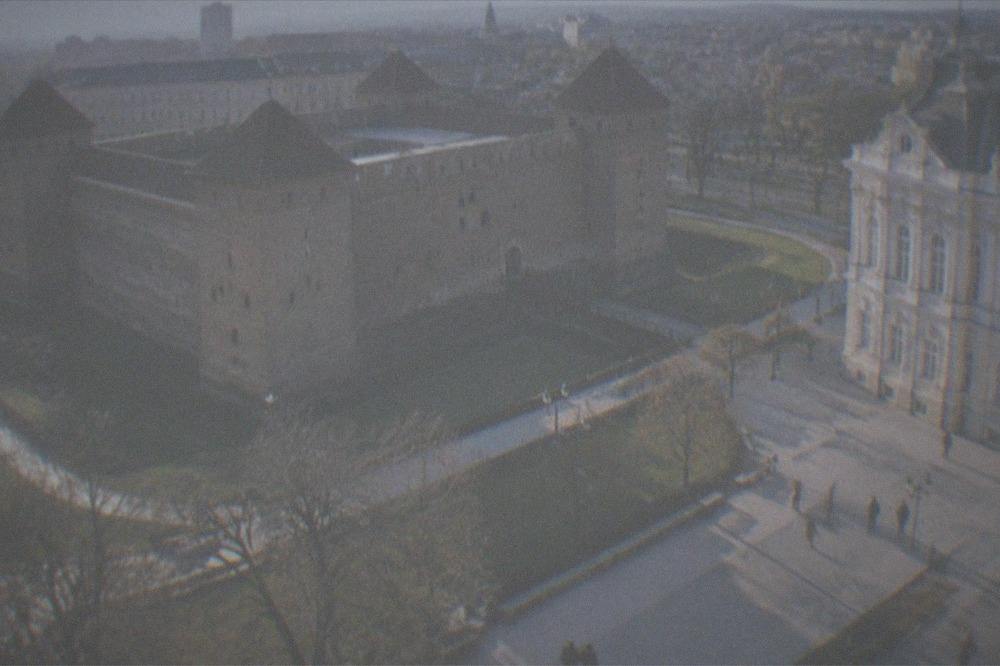
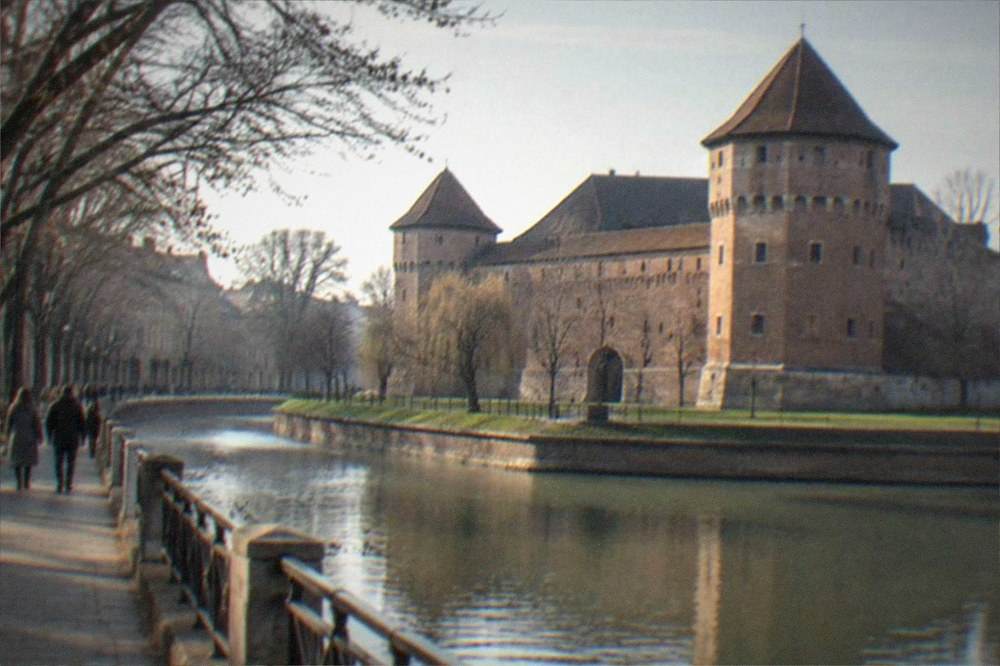
Huniade Castle deserves a visit anyway, even closed: the keep beside the Bega is the oldest structure in the city, and medieval walls from the eras of Iancu de Hunedoara and Carol Robert de Anjou have been discovered during the current works. The restored Cetate Synagogue, whose interior stenciling was nearing completion in late 2025, hosts public events and is one of the clearest signs of the heritage revival.
| Site | Chapter of History | Visitor Status |
|---|---|---|
| Huniade Castle | Medieval fortress, Ottoman and Habsburg eras | Closed for restoration, partial reopening targeted 2027 |
| Baroque Palace, Union Square | Habsburg baroque, art collections | Open, seasonal hours |
| Memorial of the Revolution | December 1989 | Open, 20 lei adults |
| Banat Village Museum | Rural Banat heritage | Open Wed to Sun |
| Cetate Synagogue | Jewish heritage of Cetate | Open for events |
| Theresia Bastion | Remnant of the baroque fortress | Public spaces, shops and cafes |
Beyond the city itself, the wider region carries the same story further: Corvin Castle at Hunedoara, one of the great gothic fortresses of Europe, is a feasible day trip from Timisoara, and a guided option pairs it with Sibiu.
How Should You Plan A History-Focused Trip To Timisoara?
Plan at least two full days: one for the baroque core of Cetate, Union Square, Victory Square and Liberty Square, and one for the 1989 sites, the bastion and the open-air museums, with a third day reserved for a regional excursion such as Corvin Castle or the Banat villages. Spring and early autumn suit the walking-heavy itinerary best, since the JMA climate normals give Timisoara means of 17.3 C in May and 17.2 C in September, against 0.0 C in January.
The climate table matters more than visitors expect, because this itinerary is almost entirely on foot. June is the wettest month at 79.1 mm of rain and March the driest at 34.1 mm, with 600.7 mm across the year, so any month works, but the shoulder seasons combine comfortable temperatures with thinner crowds. Our best time to visit Timisoara page breaks the year down month by month.
| Month | Mean Temperature (C) | Precipitation (mm) | Fit for a History Trip |
|---|---|---|---|
| March | 6.5 | 34.1 | Cool, driest month, few crowds |
| May | 17.3 | 57.2 | Excellent, peak walking weather |
| June | 20.9 | 79.1 | Warm but the wettest month |
| July | 22.8 | 61.9 | Warmest month, festival season |
| September | 17.2 | 50.4 | Excellent, JazzTM festival |
| December | 1.5 | 44.7 | Cold, Christmas Market in Victory Square |
For practical logistics, the getting around Timisoara guide covers the trams and the vaporetto on the Bega, and the where to stay in Timisoara page explains which historic district suits which budget. History travelers should note that the tourist tax, a promotion levy set by local council decision for 2026 and reported at 2 percent of the accommodation tariff, is collected by the lodging, not paid at a desk.
For the 1989 chapter specifically, a dedicated guided walk of the revolution sites is the strongest way to close the trip, since it ties the squares you have already learned to the events that made them famous.
If you would rather have the whole arc of the city, from fortress walls to electric light to revolution, laid out for you by a guide, these three options are the strongest history-focused picks on the operator's live listings.
Common Questions About Timisoara History
What is Timisoara famous for in history?
Timisoara is famous as the first city on mainland Europe with electric street lighting, on 12 November 1884, and as the city where the 1989 Revolution began, the uprising that ended communist rule in Romania. It was also a European Capital of Culture in 2023.
Was Timisoara part of Hungary or Austria?
Both, at different times. The city belonged to the medieval Kingdom of Hungary, then to the Habsburg monarchy from the early eighteenth century, under its Hungarian name Temesvar and German name Temeswar. It joined Romania after the First World War, when the Banat region was divided among the successor states.
Why is Timisoara called Little Vienna?
The nickname "Little Vienna" is common usage, never an official designation, and it comes from the city's Habsburg-era baroque squares, pastel facades and coffeehouse culture, built when Vienna administered the Banat as a crown province. Locals use it affectionately, but no city authority claims it.
What happened in Timisoara in 1989?
Protests that began in mid-December 1989 around the reformed pastor Laszlo Tokes's parish grew into mass demonstrations against the Ceausescu regime. Security forces fired on crowds, the city declared itself free before the capital, and the uprising spread to Bucharest, ending with the fall of the regime on 25 December 1989.
What is the oldest building in Timisoara?
Huniade Castle, beside the Bega, is the oldest standing monument in the city, with medieval walls from the eras of Iancu de Hunedoara and Carol Robert de Anjou. It has been closed for restoration since the mid-2000s, with a partial reopening targeted for early 2027.
How old is Timisoara?
The settlement is first documented in thirteenth-century Hungarian royal charters, making it roughly eight hundred years old as a named town, though the fortress site on the Bega marshes is older still. Its baroque center, the part visitors see, largely dates from the eighteenth century onward.