Why Is Timisoara Called Little Vienna?
Timisoara, in western Romania, picked up the Little Vienna nickname under Habsburg rule. Here is where the name comes from and what still justifies it today.
Timisoara, in Timis County in the Banat region of western Romania, is often called Little Vienna, and the nickname is common usage rather than an official designation: no city hall decree, no tourism authority document and no Habsburg edict ever granted it. Under its Hungarian name, Temesvár, and its German name, Temeswar, the city spent roughly two centuries inside the Habsburg Empire, and that long administration is what the nickname points at. The city hall's own "Premierele Timisoarei" list records what that era built: the first lamp-lit streets in the Habsburg monarchy in 1760, the first newspaper printed in Romania in 1771, and, on 12 November 1884, the first city on mainland Europe with electric street lighting, 731 incandescent lamps over 59 km of streets. None of that is Viennese by origin, but all of it happened inside the same imperial world that produced Vienna's grand boulevards, and visitors keep noticing the resemblance.
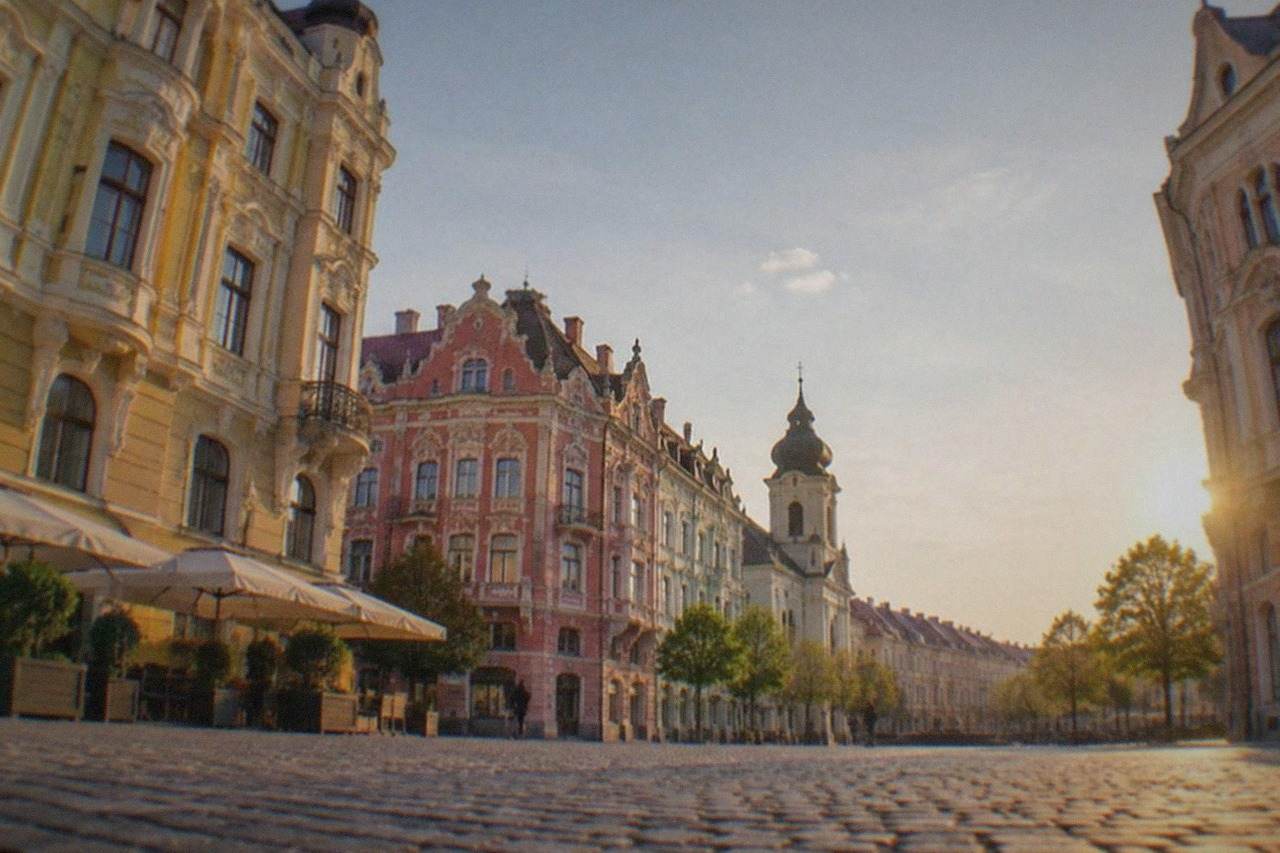
Where Does The Little Vienna Nickname For Timisoara Come From?
The nickname comes from Timisoara's roughly two centuries as a Habsburg city, when the empire rebuilt the fortress town with baroque squares, secular buildings and gaslit streets that echoed imperial Vienna, and it is a comparison travelers and locals made informally, never an official title granted by the city or any authority. The Habsburg monarchy took the city in the early eighteenth century, and from 1728 it began canalising the Bega, creating the first navigable canal in Romania according to the city hall's economic report. What followed was a program of urban development that looked to Vienna for its models: a star-shaped fortress, wide squares, administrative palaces and a German-speaking bureaucracy. The comparison stuck because the architecture genuinely shares a family resemblance with the imperial capital, and because the city's elites, German and Hungarian alike, cultivated a Central European urban culture that felt closer to Vienna than to Bucharest.
The nickname works on two levels. On the surface it is aesthetic: baroque facades, pastel plasterwork, domed churches and a pedestrian old town that recalls Vienna's first district. Below the surface it is cultural: Timisoara was for centuries a multilingual city of Romanians, Hungarians, Germans, Serbs and Jews, with a bourgeois civic life, coffeehouse culture and an early adoption of technology that mirrored the empire's most developed cities. That layered meaning is why the phrase survives even though the empire that produced it dissolved more than a century ago.
It is worth being precise about status, because plenty of guides blur it. "Little Vienna" is common usage only. The city's official branding around its 2023 European Capital of Culture year, confirmed on the European Commission's culture page, never leaned on the nickname as a title. Treat it as a shorthand visitors use, not a name the city claims.
What Did Habsburg Rule Actually Build In Timisoara?
Habsburg rule built the city's baroque core, its fortress layout and its record of urban firsts: Timisoara had the Habsburg monarchy's first lamp-lit streets in 1760, its first horse-drawn tram in 1869 running from Cetate to Fabric, and mainland Europe's first electric street lighting on 12 November 1884, all documented on the city hall's own list of city firsts. The empire did not merely occupy Timisoara; it engineered it. The Bega canal, canalised from 1728, made the city a river port. The fortress, with Theresia Bastion as its best-preserved remnant, imposed a star-shaped plan on the Cetate district. The squares that visitors photograph today, Piata Unirii and Piata Libertatii, were laid out as baroque showpieces with Catholic and Serbian Orthodox cathedrals facing each other across the open space.
The record of firsts from that era is unusually dense, and the city hall's own economic report verifies each entry. A few of the most cited:
| Year | First recorded in Timisoara | Status |
|---|---|---|
| 1718 | Oldest attested brewery in Romania | Verified, city hall report |
| 1728 | Start of canalising the Bega, first navigable canal in Romania | Verified, city hall report |
| 1760 | First city of the Habsburg monarchy with lamp-lit streets | Verified, city hall report |
| 1771 | First newspaper printed in Romania, "Temeswarer Nachrichten" | Verified, city hall report |
| 12 Nov 1884 | First city on mainland Europe with electric street lighting | Verified, city hall report |
| 1899 | First electric tram in Romania | Verified, city hall report |
The 1884 lighting record deserves emphasis, because it is the detail that most surprises visitors. Seven hundred and thirty-one incandescent lamps over 59 km of streets, four years before the empire's capital completed its own electrification program. A "little" city ahead of Vienna itself in at least one race is part of the nickname's quiet irony. The wider set of guides lives on Timisoara Travel Guide.
The built legacy is easiest to see in three places. Piata Unirii, with its baroque palaces and the St George Roman Catholic Cathedral, is the most Viennese single view in the city. Theresia Bastion preserves the fortress geometry. And the Bega canal, with its promenades and the seasonal vaporetto, gives the city the waterfront strolling culture that Vienna achieves along the Danube Canal.
If you want a structured introduction to this heritage rather than self-guided wandering, a walking tour with a local guide covers the historical core efficiently.
Which Timisoara Squares And Buildings Look Most Viennese?
The most Viennese views in Timisoara are Piata Unirii with its baroque palaces and twin cathedrals, Piata Victoriei with its opera house and Secession-style facades, and the Cetate old town's grid of pastel buildings, with the Dicasterial Palace in Iosefin as the single most explicitly Habsburg building in the city. Piata Unirii is the heart of the comparison. The square's baroque and Art Nouveau facades, arranged around the Catholic and Serbian Orthodox cathedrals and the Art Museum's Baroque Palace, produce the painted-plaster elegance that travelers associate with Vienna's first district. Piata Victoriei, the long ceremonial square where the 1989 Revolution played out, adds the Opera and the Metropolitan Orthodox Cathedral to the ensemble, a mix of imperial and local that Vienna itself never had to reconcile.
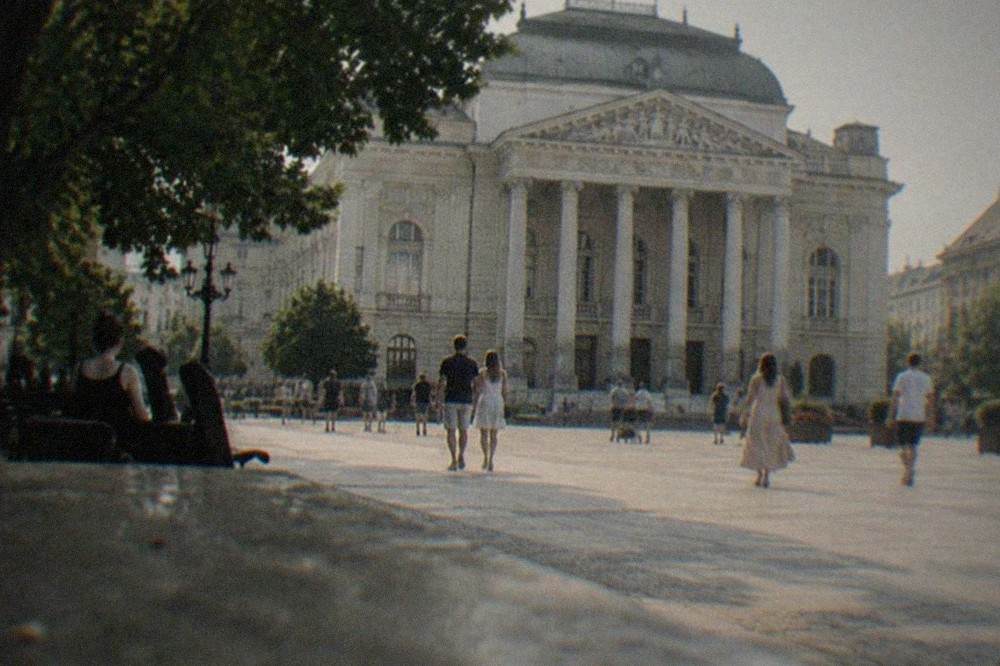
The Dicasterial Palace in Iosefin is the deep cut. Built to house the imperial administration, it is the most literally Habsburg building in the city, and it still functions as a courthouse. The Elisabetin and Fabric districts extend the comparison into residential streets, where early twentieth-century facades in ochre, cream and rose recall Vienna's outer districts more than anything in Romania's south. For a fuller picture of how the city presents itself today, see what Timisoara is known for.
A useful way to compare the squares, since each carries a different piece of the Viennese inheritance:
| Square | District | What It Shows Of The Habsburg Legacy |
|---|---|---|
| Piata Unirii | Cetate | Baroque palaces, twin cathedrals, Art Museum in the Baroque Palace |
| Piata Libertatii | Cetate | Smaller baroque square, former garrison command courtyard nearby |
| Piata Victoriei | Cetate | Opera, Secession-style facades, ceremonial imperial axis |
| Trajan Square | Fabric | Historic market square of the former industrial suburb |
| Piata Mocioni | Iosefin | Quiet residential square in the historic quarter near the Bega |
The churches are part of this story too. The city's Orthodox, Catholic and Serbian Orthodox cathedrals stand within walking distance of one another, and an ecumenical walking tour is the most direct way to take them in with context, since the guide explains how each community arrived under Habsburg religious tolerance. Check availability if that angle appeals.
Is The Little Vienna Comparison Still Accurate Today?
The comparison is half accurate today: Timisoara's baroque core, coffeehouse culture and multilingual heritage genuinely justify it, but the city is also unmistakably Romanian, Balkan-adjacent and cheaper, with a student population, a river-canal lifestyle and a 1989 Revolutionary history that Vienna has no equivalent of, so treat the nickname as a pointer to the old town rather than a description of the whole city. The modern city of Timișoara, with a resident population of 250,849 at the 2021 census as reported by INS, is a regional center whose economy runs on industry and universities, not imperial administration. Its squares host Romanian-language theatre, its streets host a lively cafe and craft beer scene, and its recent accolades, including being named Romania's Destination of the Year 2026 at a May 2026 gala with roughly 450,000 public votes cast, are earned on its own terms rather than as a Vienna understudy.
The differences matter as much as the resemblances. Vienna is imperial at monumental scale; Timisoara is imperial at neighborhood scale, which is precisely why visitors find it walkable and affordable. The city's climate is continental, with JMA climate normals for station Timisoara 15247 giving a July mean of 22.8 C and a January mean of 0.0 C, and precipitation from 34.1 mm in March to 79.1 mm in June, so the outdoor square life that feels so Central European is really a three-season pleasure. And the city's defining modern moment, the 1989 Revolution that began here in December, belongs to a story Vienna never lived. For that history, see what happened in 1989 in Romania.
There is also a practical difference the nickname obscures: cost. Prices in Timisoara run well below Austrian levels, a point worth reading in detail before budgeting, and the question of whether Timisoara is worth visiting deserves its own answer beyond the nickname.
Common Questions About Timisoara And The Little Vienna Nickname
Is Little Vienna the official name of Timisoara?
No. It is common usage only, never an official designation. No city authority or tourism body granted the title, and the city's official branding, including its 2023 European Capital of Culture program, does not use it as a name.
Which other cities are called Little Vienna?
Several Central European cities carry similar nicknames, including ones in Hungary, Slovakia and the Balkans, all for the same reason: Habsburg-era baroque architecture and imperial urban planning. Timisoara's claim rests on its fortress core, its baroque squares and its dense record of urban firsts under Habsburg rule.
Was Timisoara part of Austria or Hungary?
Timisoara was part of the Habsburg Empire, administered for most of that period within the Kingdom of Hungary, under its Hungarian name Temesvár and its German name Temeswar. It joined Romania in 1918 to 1919, after the First World War and the dissolution of Austria-Hungary.
Why does Timisoara have so many churches of different faiths?
Habsburg religious policy and the city's mixed population of Romanians, Hungarians, Germans, Serbs and Jews produced Orthodox, Roman Catholic and Serbian Orthodox cathedrals, plus synagogues, all within the historic core. The Catholic and Serbian Orthodox cathedrals face each other across Piata Unirii.
Does Timisoara look like Vienna today?
Its old town does, in texture: baroque and Secession facades, pastel plasterwork, pedestrian squares and coffeehouses. The wider modern city is a Romanian regional center with a different skyline, different prices and a different recent history, so the resemblance is strongest in Cetate, Elisabetin and Fabric.
What is the best way to see the Viennese side of Timisoara?
Walk Cetate from Piata Unirii to Piata Victoriei, cross into Elisabetin for the Dicasterial Palace area, and finish along the Bega. A guided walking tour adds the historical context, and the free essentials tour with Alex on GuruWalk, tip-based, covers the same core for travelers on a budget.
The nickname endures because it is shorthand for something real: a Habsburg-built old town in a Romanian city, with squares, facades and a coffeehouse rhythm that genuinely recall the imperial capital, at a scale and a price Vienna no longer offers. Walk Piata Unirii at dusk and the comparison explains itself, no decree required.