What Language Is Spoken In Timisoara?
Romanian is the official language of Timisoara, Romania, but the city's Banat heritage makes it one of Europe's genuinely multilingual places, with Hungarian, German, Serbian and English all in daily use.
Romanian is the language you will hear first in Timisoara, a city in Timis County in the Banat region of western Romania, but it is far from the only one spoken here. Timișoara spent centuries under Habsburg and Hungarian administration, under its Hungarian name Temesvár and its German name Temeswar, and that layered past left a city where Hungarian, German, Serbian and English all sit within earshot of the main square. This page explains what is official, what is heritage, and what a visitor actually needs to get by.
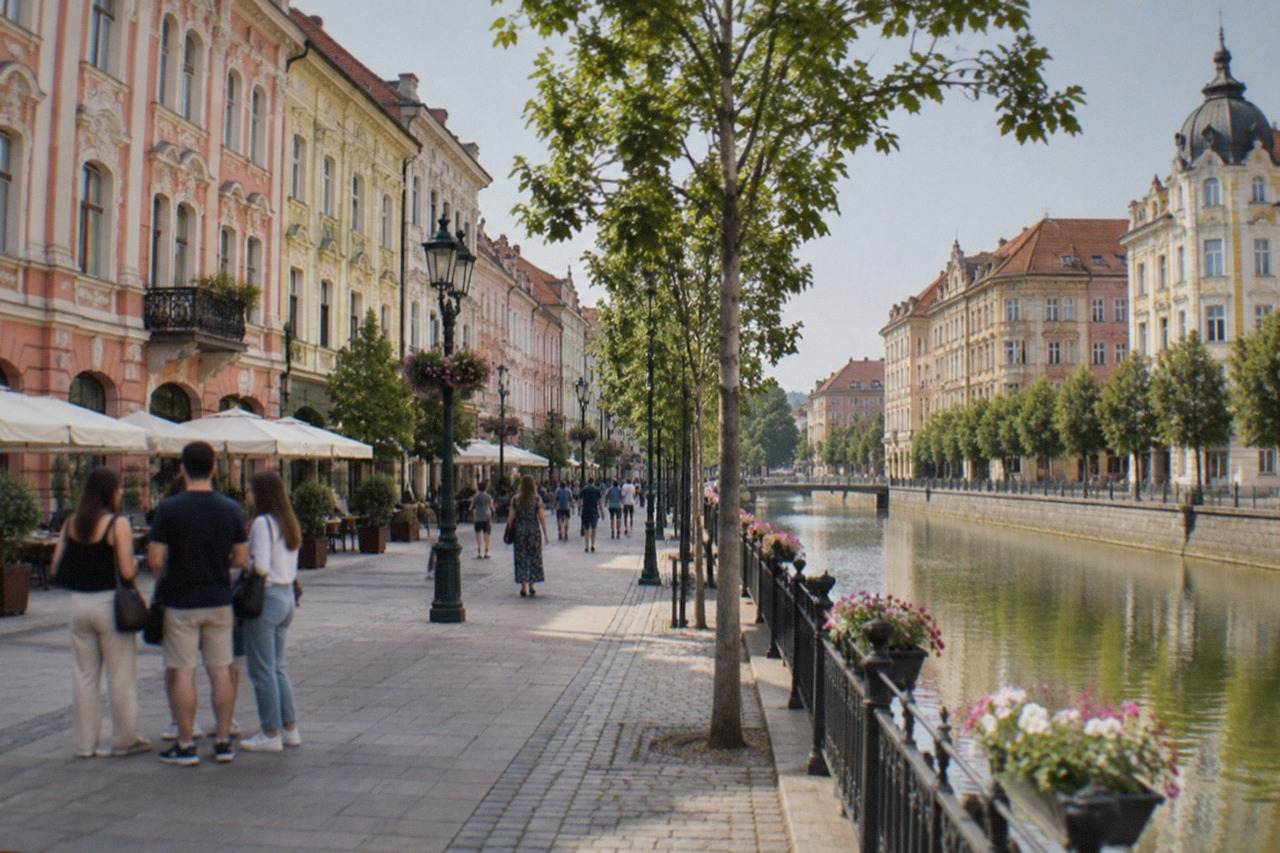
What Language Is Spoken In Timisoara?
The official and overwhelmingly dominant language of Timisoara, Romania, is Romanian, the country's sole official language and the native tongue of the large majority of residents. Hungarian is the most widely spoken minority language, followed by German and Serbian, reflecting the city's centuries under Habsburg rule in the multilingual Banat region. English is widely understood, especially among younger residents, and is the default second language for most tourism situations.
Romanian is a Romance language, closer to Italian, French and Spanish than to its Slavic neighbors, so visitors who know any Latin-rooted language will recognize surprising amounts of everyday vocabulary. Street signs, menus, transport announcements and official notices are all in Romanian. The city's own institutions, from the town hall to the public transport operator STPT, operate in Romanian first, though the tourist information center handles inquiries in several languages.
What makes Timisoara unusual is not the official language but the layers underneath it. The Banat region was one of the most deliberately mixed corners of the Habsburg Empire, settled in the eighteenth century with Romanians, Germans (the Danube Swabians), Hungarians, Serbs, Slovaks, Jews and others living in the same towns. That legacy still shapes what you hear in churches, on theatre stages and at family tables.
Is Hungarian Or German Still Spoken In Timisoara?
Yes, both are still spoken in Timisoara today, though by small and shrinking communities: Hungarian remains the most common minority language, used in churches, some schools and cultural institutions, while German survives through the German-language theatre, church congregations and a small community of Banat Swabians who stayed after the twentieth-century emigrations. Serbian is also protected, and the city's Serbian Orthodox community keeps its own cathedral in the center.
The clearest proof of the city's multilingual tradition is institutional. Since 1953, Timisoara has been the only European city with three state theatres performing in three languages, Romanian, Hungarian and German, a fact confirmed on the city hall's own list of the city's firsts. That is not a folkloric gesture; it is three publicly funded companies producing full seasons in three languages in the same city.
The German presence also has a printed pedigree: the first newspaper printed on the territory of modern Romania, the Temeswarer Nachrichten, appeared here in 1771, in German. Hungarian, meanwhile, is the heritage language of a community that traces itself to the city's centuries as Temesvár, and the Hungarian theatre on the edge of the old town gives it a permanent public stage.
For a visitor, the practical effect is modest but real. You may hear Hungarian or German at a service in one of the historic churches, catch a bilingual poster for a theatre premiere, or meet a shopkeeper whose family has spoken German at home for five generations. You will not need either language, but knowing they exist turns a walk through Cetate or Fabric from sightseeing into reading the city's history aloud. For travelers who want a fuller grounding, our Romanian phrases guide covers what to learn before arriving.
Do People In Timisoara Speak English?
Yes, English is widely spoken in Timisoara, particularly among residents under about forty, and it is the most useful foreign language for a visitor. Hotels, restaurants in the center, museums with international traffic and the tourist information staff all handle English comfortably. Expect more English in Cetate, Iosefin and Elisabetin, the neighborhoods visitors actually walk, and less certainty with older residents or in outlying districts.
Romanian schools teach English from an early age, and the city's large student population, anchored by several universities, keeps everyday fluency high. German and French are also common second languages among older generations, a legacy of the education system before the revolution of 1989, so a German-speaking visitor will often find someone to switch to German with. Serbian is spoken across the border community, given the frontier is barely an hour away.
The honest picture is that a monolingual English speaker can manage a full visit, from airport to hotel to dinner, without a phrasebook. The two situations where English thins out are small neighborhood shops and taxis, where pointing and a few Romanian words go further. A friendly "buna ziua" (good day) and "multumesc" (thank you) will earn more goodwill than any amount of switching to English first.
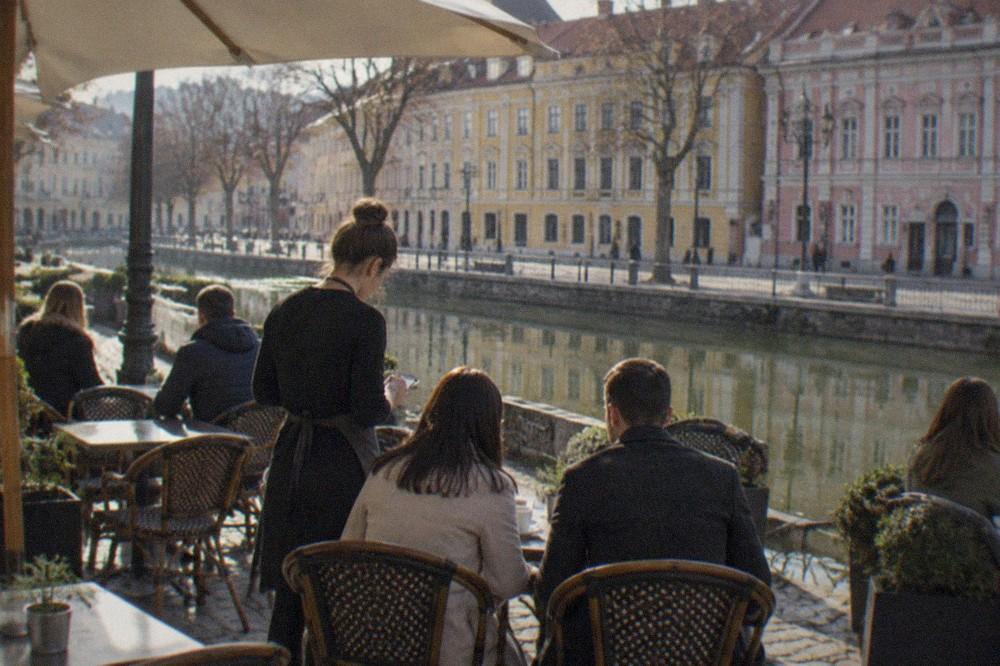
What Languages Will You Actually Hear On The Street?
On an ordinary day in central Timisoara you will hear Romanian almost everywhere, Hungarian in pockets of daily conversation, occasional German from older residents and tour groups, and Serbian from visitors and border commuters crossing from the south. Add English between tourists and staff, and the soundscape of Piata Unirii or Piata Victoriei can plausibly cover five languages in an hour without anyone noticing it as unusual.
The city's own tourism data shows why. The tourist information center recorded about 4,928 visitors in 2025, roughly seventy percent of them international, with the top origins after Romania being Germany, Serbia, France and Spain. That mix of guests keeps local hospitality staff practiced in switching languages mid-sentence. Other pages covering the same trip are gathered on Timisoara Travel Guide.
The table below summarizes who speaks what and where you are most likely to encounter it:
| Language | Status in Timisoara | Where you are most likely to hear it |
|---|---|---|
| Romanian | Official language, native to the majority | Everywhere: signs, shops, transport, everyday speech |
| Hungarian | Largest minority language, state theatre since 1953 | Hungarian theatre, churches, family settings, some schools |
| German | Historic community language, state theatre since 1953 | German theatre, older residents, German-speaking visitors |
| Serbian | Protected minority language, border community | Serbian Orthodox Cathedral, visitors from Serbia |
| English | Dominant foreign language, taught from primary school | Hotels, central restaurants, museums, younger residents |
| French | Common older-generation second language | Occasional, mainly among residents educated before 1989 |
One practical note: the city's multilingualism is a heritage asset, not a translation service. Signs, menus and tickets are in Romanian, with English translations patchy outside the tourist core. A translation app and a handful of Romanian phrases cover the gaps. Our page on what Timisoara is known for explains more of the heritage behind the languages.
Why Is Timisoara So Multilingual Compared With Other Romanian Cities?
Timisoara is unusually multilingual because the Banat region was deliberately resettled by the Habsburg monarchy in the eighteenth century with colonists from across Central Europe, creating a mixed Romanian, German, Hungarian, Serbian, Slovak and Jewish society that no later border change fully unraveled. The city kept German and Hungarian institutions through the empire's collapse, and Romania's minority protections preserved theatres, schools and churches after the region became part of Romania.
The Habsburgs took the city in 1716, and the following decades brought the first organized colonization of the Banat, when imperial authorities recruited German-speaking settlers to farm the reclaimed swampland. Timisoara itself became an administrative capital of a province governed in German, with a Hungarian-speaking hinterland and Romanian, Serbian and Jewish communities woven through the towns and villages around it. The Bega canal, begun in 1728 as the first navigable canal in Romania, was itself an imperial project built by this mixed society.
When the Banat was divided between Romania, Yugoslavia and Hungary after the First World War, Timisoara's communities stayed put. The German-speaking population largely emigrated in the twentieth century, especially in the decades after the fall of communism, but the theatres, the churches and the family memories remained. That is why a mid-sized Romanian city operates three state theatres in three languages, something no other European city does.
The multilingual heritage is easiest to see in the city's religious architecture: a Romanian Orthodox Metropolitan Cathedral, a Roman Catholic cathedral, a Serbian Orthodox cathedral and two historic synagogues all stand within or beside the old center. The Jewish Heritage Tour of Timisoara walks through the part of that story preserved in the Cetate and Iosefin quarters, with a guide who explains the languages and communities that built them.
Should You Learn Any Romanian Before Visiting Timisoara?
You do not need Romanian for a short visit to Timisoara, because English covers hotels, central restaurants and attractions, but learning a few words is worth the small effort: greetings like "buna ziua", "multumesc" and "scuze" are appreciated, and numbers help in markets and shops. If you plan to leave the center, use taxis or visit during festivals, a phrasebook or translation app becomes genuinely useful rather than polite decoration.
The city is compact and visitor-facing, and the industries that serve travelers are used to international guests. Where the language barrier bites is exactly where a local phrase helps most: ordering at a neighborhood grill, asking a bus driver which stop is yours, or buying from a market stall. Even a badly pronounced "cat costa?" (how much?) changes the interaction.
For a fuller trip into the Banat countryside or toward the Serbian border, expect less English in villages and more gesture-and-goodwill. The region's day trips reward a guide precisely for this reason. Travelers weighing the whole question of whether the city justifies the flight can read our assessment of whether Timisoara is worth visiting, and the history behind the city's Austrian-era nickname is covered in why Timisoara is called Little Vienna.
Common Questions About Language In Timisoara
What Language Is Spoken In Timisoara?
Romanian is the official language and the one spoken by the large majority of residents in Timisoara, Romania. Hungarian, German and Serbian are living minority languages with historic institutions behind them, and English is widely spoken, especially by younger residents and in tourism settings.
Do they speak English in Timisoara?
Yes, widely. English is the default foreign language in hotels, central restaurants, museums and the tourist information center, and the city's student population keeps everyday fluency high. You can manage a full visit in English alone, though a few Romanian phrases are appreciated.
Is German still spoken in Timisoara?
Yes, by a small community. Timisoara has had a German-language state theatre since 1953, one of three state theatres in three languages, and German was the city's administrative language under Habsburg rule. Most German speakers you meet today, however, will be visitors from Germany and Austria.
Why does Timisoara have three theatres in three languages?
Because of its Banat heritage. Since 1953 the city has been the only European city with three state theatres, performing in Romanian, Hungarian and German, a continuation of the multilingual society created under Habsburg rule and preserved by Romania's minority protections.
Is Hungarian useful in Timisoara?
Not for a visitor, but it is the most spoken minority language. Hungarian serves a local community with its own theatre, churches and cultural life, and the city spent centuries under Hungarian administration as Temesvár. Romanian or English will serve you better in every tourist situation.
What language are signs and menus in Timisoara written in?
Romanian, throughout the city. English translations appear in the tourist core but are patchy outside it, so a translation app and a few basic phrases are the practical backup for markets, local shops and public transport.
Romanian is the answer to the headline question, but the richer truth is that Timisoara speaks with several voices at once, and the city's squares, theatres and churches make that audible every day of the week.