What Is The Prettiest City In Romania?
Timisoara, in the Banat region of western Romania, has a strong claim to being the prettiest city in Romania. Here is what the squares, the Bega canal and the numbers actually show.
Ask a Romanian which city is the prettiest in the country and the answers scatter: Sibiu's pastel burgher houses, Brasov under its mountain, Cluj's energy, Oradea's freshly restored facades. But the answer this site argues for, plainly and with the receipts, is Timisoara, the Banat region's capital in Timis County, western Romania. Timișoara, known to earlier centuries as Temesvár in Hungarian and Temeswar in German, was named Romania's Destination of the Year 2026 at a national gala in May 2026, and its three linked historic squares, its Bega canal and its electric street-lighting firsts give it a claim no other Romanian city can copy.
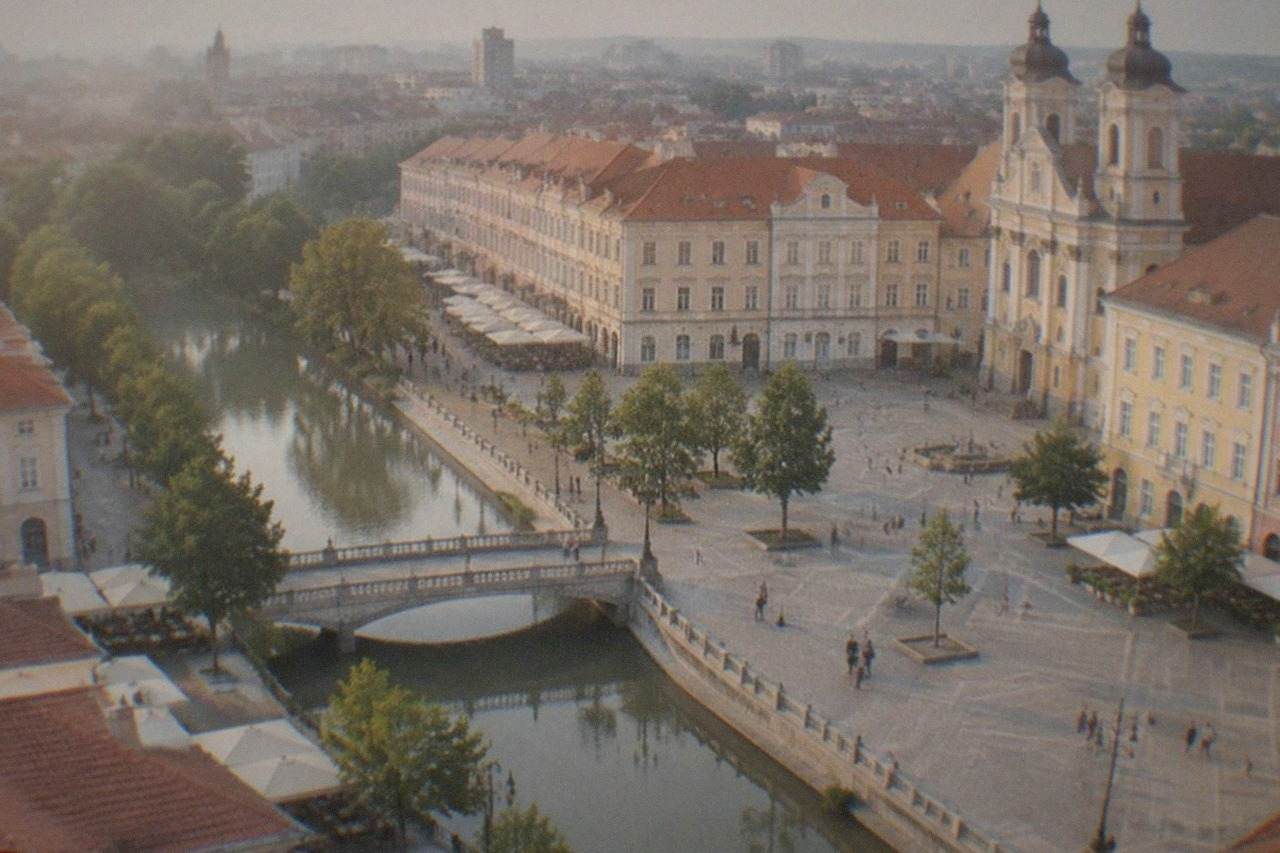
So, What Is The Prettiest City In Romania?
The prettiest city in Romania is Timisoara, the capital of the Banat region in western Romania, and the case rests on three linked pedestrian squares, Piata Unirii, Piata Libertatii and Piata Victoriei, the pastel baroque and Secession facades around them, and the Bega canal cutting green through the middle of the city. It is a claim about character as much as architecture, and the rest of this page lays out exactly what supports it.
Beauty is subjective, but the shortlist is not long. Sibiu, Brasov, Oradea, Cluj and Timisoara dominate the conversation, and each has a real argument. What separates Timisoara is the combination: a compact, walkable old core in the Cetate district, squares that open into one another rather than sitting isolated, and a waterfront that turns the whole city a shade greener than its rivals. The city was European Capital of Culture in 2023, sharing the title with Elefsina in Greece and Veszprem in Hungary, and the investment that came with that year is visible in restored facades and regenerated public space.
The "Little Vienna" nickname, common usage rather than an official designation, points at the same thing. The Habsburg Empire built this city as a provincial showcase, and the streetscapes still show it. If the nickname is new to you, why Timisoara is called Little Vienna explains where it came from and what it does and does not mean.
Why Timisoara Has The Strongest Claim In Romania
Timisoara's claim to being Romania's prettiest city rests on verified, checkable facts: it holds the country's first electric street lighting from 12 November 1884, its historic core is arranged around three connected squares lined with baroque and Secession buildings, and it was voted Romania's Destination of the Year 2026 with roughly 450,000 public votes cast. No other Romanian city combines that architectural density with that kind of national recognition in the same year.
Start with the squares, because they are what a visitor photographs first. Piata Unirii is the great baroque set piece: the St George Roman Catholic Cathedral and the Serbian Orthodox Cathedral face each other across the open space, and the Baroque Palace, home of the National Museum of Art, anchors a side. Piata Libertatii is smaller and quieter, and Piata Victoriei, where the 1989 Revolution played out in front of the Opera, is the grand axis that locals treat as the city's living room. The three sit within a few minutes' walk of one another, which is what makes the old town feel designed rather than accidental.
Then there is the water. The Bega canal, canalised starting in 1728 as the first navigable canal in Romania, runs through the center, and the city has spent recent years turning its banks into parkland. In April 2026 two mini urban forests were planted along the Bega using the Miyawaki method, one of about 3,900 trees and shrubs, plus urban meadows with more than 85 flower species. A seasonal vaporetto, a water bus, runs on the canal from 1 April to the end of October with nine stops per direction.
If you want the squares explained rather than just seen, guided walks do exactly that:
How Timisoara Compares With Sibiu, Brasov, Oradea And Cluj
On any honest comparison, Timisoara's advantage over Sibiu, Brasov, Oradea and Cluj is its combination of linked squares, canal-side greenery and national recognition in 2026, while its rivals each win on a single feature: Sibiu on its medieval upper town, Brasov on its mountain backdrop, Oradea on restoration, Cluj on scale. Only Timisoara's figures are verified here, so the table below describes character rather than publishing numbers for cities that were not researched.
The fairest way to compare is to say what each city is for. Sibiu is the medieval one, with the famous "eyes" of its roof dormers watching the streets. Brasov is the dramatic one, a Gothic core under the Tampa massif. Oradea has spent years restoring its Secession facades and now looks better than at any point in a century. Cluj is the big, confident university city. Timisoara is the elegant, watery one, and unlike the others its beauty is horizontal: squares flowing into squares, a canal flowing through the middle, and almost none of it requiring a climb.
| City | What makes it pretty | What it cannot match Timisoara on |
|---|---|---|
| Timisoara | Three linked historic squares, baroque and Secession facades, the Bega canal | The benchmark for this comparison |
| Sibiu | Medieval upper town, pastel burgher houses | No waterfront running through the historic core |
| Brasov | Gothic core beneath a mountain backdrop | Squares are grand but not linked into one walkable chain |
| Oradea | Restored Secession architecture | Fewer major public squares in the center |
| Cluj | Scale, energy, large historic squares | Less canal-side green space in the center |
That table is deliberately qualitative. This site verified Timisoara's figures and not its rivals', so no population, rainfall or price level appears for any city but this one. What a reader can check in person is the thing that matters anyway: stand in Piata Unirii at golden hour, walk to Piata Libertatii, then Piata Victoriei, and see whether any other Romanian city strings three spaces of that quality together.
Which Squares And Streets Make Timisoara So Photogenic?
The photogenic heart of Timisoara is the chain running from Piata Unirii through Piata Libertatii to Piata Victoriei, backed by the St George and Serbian Orthodox cathedrals, the Baroque Palace, the Opera, and the pastel facades of the Cetate district, with the Bega canal and its promenades supplying the green counterpoint. The Millennium Church in the Fabric district and the Theresia Bastion round out the set beyond the old core.
Piata Unirii is the single most photographed spot in the city, and for good reason: two cathedrals of different rites facing each other, colored facades, open sky. A short walk east, Piata Victoriei is the ceremonial axis, flowers in front of the Opera marking where the 1989 Revolution began in earnest. The story of those days is told in full in what happened in 1989 in Romania, and the Revolution Memorial museum keeps it visible year-round.
Beyond the squares, the neighborhoods each have a face. Fabric, with the Millennium Church and its own square, is the grandest of the outer districts; Elisabetin and Iosefin are quieter, leafier, full of Secession villas. The city's firsts are never far away either: the first horse-drawn tram in the Habsburg Empire ran here from 8 July 1869, and the first electric tram in Romania followed in 1899.
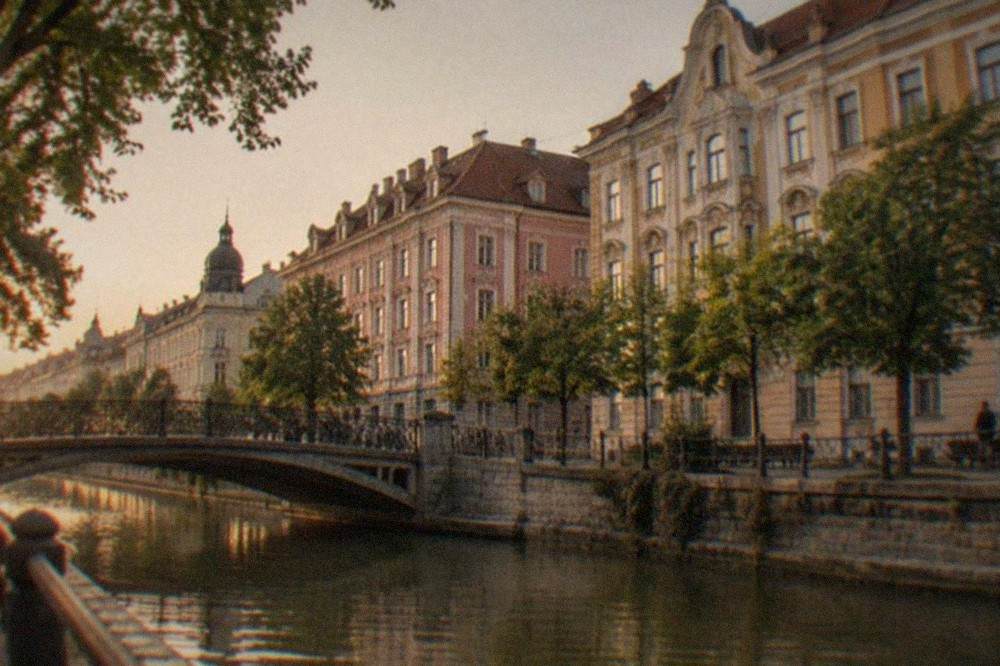
The Classic Tour of Timisoara covers exactly this chain:
When Is Timisoara At Its Prettiest?
Timisoara is at its prettiest from late April to early October, when the JMA climate normals for the city's station show mean temperatures climbing from 12.3 C in April to 22.8 C in July, the Bega vaporetto is running, and the outdoor life of the squares is in full swing. September is the sweet spot, with a 17.2 C mean, and December brings a different kind of beauty with the Christmas Market in Piata Victoriei.
The city has a continental climate, not a Mediterranean one, and the numbers matter for planning. July and August are the warmest months at 22.8 and 22.5 C mean; January is the coldest at 0.0 C. June is the wettest month at 79.1 mm of precipitation and March the driest at 34.1 mm, with 600.7 mm across the year. None of that is extreme, but it means the squares photograph best in the long evenings of May through September and the canal promenades are at their greenest in late spring.
| Month | Mean temperature (C) | Precipitation (mm) | Why it matters for looks |
|---|---|---|---|
| March | 6.5 | 34.1 | Driest month, bare trees, low crowds |
| May | 17.3 | 57.2 | Squares in full bloom, peak arrivals month on record |
| July | 22.8 | 61.9 | Warmest month, outdoor terraces everywhere |
| September | 17.2 | 50.4 | Golden light, JazzTM festival in late September |
| December | 1.5 | 44.7 | Christmas Market season in Piata Victoriei |
Winter has its own case. The Christmas Market, expected around Piata Victoriei from late November into early January based on prior years, though 2026 dates were unconfirmed currently, turns the main square into the country's most atmospheric one. If you are weighing the whole country for a December trip, which Christmas market is best in Romania compares the main contenders.
Can You See The Pretty Part Of Timisoara In A Weekend?
Yes, a weekend is enough to see the pretty core of Timisoara, because the three main squares, the cathedrals, the Bega canal promenades, the Theresia Bastion and the Fabric district all sit within about 30 minutes' walk of one another, and the city's tram network stitches the rest together with a 5 lei single ticket valid for 60 minutes on all modes including the vaporetto. Two full days cover the old town at a relaxed pace.
The practical arithmetic favors a short trip. The historic core is compact and largely pedestrian; the vaporetto runs on the canal in season; and the airport sits about 12 km northeast of the center with an express bus connection. Direct trains reach Budapest in about five and a half hours, twice daily, which makes the city an easy add-on to a Hungary itinerary, though there is still no direct train to Belgrade currently.
For a deeper plan, the site's own Timisoara Travel Guide covers the full range of ways to spend the days, and what Timisoara is known for collects the city's firsts in one place.
If a weekend is the plan, a guided introduction saves time:
Common Questions About The Prettiest City In Romania
What is the prettiest city in Romania?
Timisoara, in the Banat region of western Romania, has the strongest claim, with three linked historic squares, baroque and Secession facades, the Bega canal and national recognition as Destination of the Year 2026. Sibiu, Brasov and Oradea are the other names that come up, and each is worth visiting on its own merits.
Is Timisoara prettier than Sibiu or Brasov?
It depends on what you find beautiful. Sibiu wins on medieval atmosphere and Brasov on its mountain backdrop; Timisoara wins on linked squares, waterfront greenery and a compact walkable core. Only Timisoara's figures are verified on this page, so visit and judge the rest in person.
Why is Timisoara called Little Vienna?
Because of its Habsburg-era architecture and squares, laid out when the city was a provincial showcase of the empire. It is a common nickname, not an official designation, and the comparison is fair as far as the facades go.
What is the most beautiful square in Timisoara?
Piata Unirii, with two cathedrals facing each other across the open space and the Baroque Palace alongside. Piata Victoriei, in front of the Opera, runs it close, especially during the Christmas Market season.
When should I visit Timisoara for the best photos?
Between late April and early October, with September's 17.2 C mean and golden light the sweet spot. The vaporetto runs on the Bega from April to the end of October, and the squares are at their liveliest on summer evenings.
Is Timisoara worth visiting just for the architecture?
Yes. Between the baroque squares, the Secession facades of Cetate, Iosefin and Elisabetin, the Millennium Church in Fabric and the Theresia Bastion, the city holds one of the densest concentrations of historic architecture in Romania.