Can I Use US Dollars In Romania?
US dollars are not accepted at tills in Romania. This guide explains the leu, card payments, exchange offices and daily budgeting for visitors to Timisoara.
No shop, cafe, museum or hotel reception in Timisoara, the largest city of the Banat region in western Romania, will accept a US dollar bill as payment. Romania has its own currency, the Romanian leu (RON), and every till in the country prices and settles in it. The euro is not adopted either, despite the country's full membership of the European Union and, since 1 January 2025, of the Schengen area. Dollars are useful only as something to exchange, never as something to spend directly.

Can You Pay With US Dollars In Timisoara?
No, US dollars cannot be used to pay for anything in Timisoara or anywhere else in Romania. Prices are set in the Romanian leu (RON), tills settle in leu, and no merchant is obliged or expected to accept foreign banknotes. A dollar bill is only good for exchanging at a bank or exchange office, and trying to hand one to a waiter or a ticket desk will simply be refused.
The leu, plural lei, is the only legal tender. The word means "lion" and the currency is sometimes written RON, its international code. Visitors sometimes assume that because Romania sits in the European Union, the euro must circulate there. It does not. The euro is not adopted, and the Romanian authorities have not set a target date that any source in this site's research confirms. You may occasionally see prices quoted in euro for large purchases such as real estate, but the actual payment converts to lei at the till.
This matters for planning. If you arrive from the United States with only dollars, your first task in Timisoara is conversion, not spending. The good news is that the city makes this easy: exchange offices cluster around the center, bank cards work widely, and contactless payment is standard on public transport, where the STPT network sells a 60-minute ticket for 5 lei and a one-day pass for 18 lei, both payable with a tap of a bank card on board.
What Currency Should You Actually Use In Timisoara?
Use the Romanian leu for everything: cash for small purchases and markets, and a bank card for hotels, restaurants, shops and public transport. The leu is the only currency Romanian tills accept, cards are widely taken in the city, and contactless payment works directly on trams, trolleybuses and the Bega river boats. Keep a modest amount of lei in cash for small stalls and tips.
How much cash is a fair question, and the honest answer is less than a decade ago. Timisoara's public transport system accepts contactless bank cards and e-wallet cards on board, so you never need coins for a tram ride. Cards also cover most restaurants and shops in the center. Cash remains useful at the Christmas Market stalls, at small neighborhood shops and anywhere a card terminal is broken, which happens.
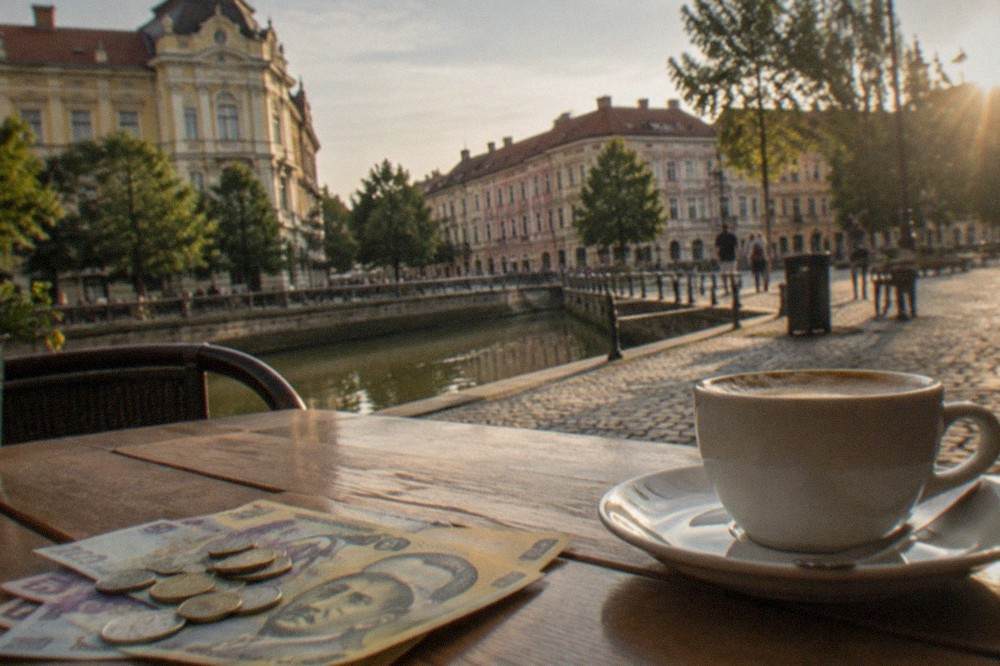
For a sense of scale, cost-of-living trackers updated in September 2026 put typical Timisoara prices like this:
| Typical purchase | Usual price in Timisoara |
|---|---|
| Cappuccino, regular area | 13 to 15 RON |
| Draught beer, 0.5 L, neighborhood pub | 11 to 12 RON |
| Inexpensive restaurant meal | 45 to 50 RON |
| Public transport, single 60-minute ticket | 5 RON |
| Public transport, one-day pass | 18 RON |
These are planning ranges drawn from price aggregators, not promises from any single venue, and individual restaurants can charge more. Check the menu or the room before you commit.
One more thing worth knowing before you spend anything: Timisoara levies a tourist tax on overnight stays. The local council decision HCL 719/2025 sets the "taxa speciala pentru promovarea turistica" for 2026, and reporting places the rate at 2% of the accommodation tariff excluding VAT, collected by the lodging. It appears on your hotel bill rather than at the till, so it will not affect your day-to-day cash needs.
Where Can You Exchange Dollars For Lei In Timisoara?
Exchange offices and banks in the city center convert US dollars to lei, and the rates posted in Timisoara are generally fair compared with airport desks. Bring undamaged bills, because heavily worn or older-design notes may be refused, and always check the posted rate and any commission before handing money over. Avoid exchanging at the airport unless you need a small amount immediately.
The practical advice is simple. Change a modest amount on arrival, enough for a day or two of small expenses, then rely on your card for the rest. Bank card networks give a conversion close to the interbank rate, and Romanian ATMs are dense in the center around Piata Unirii and Piata Victoriei. Some ATMs offer dynamic currency conversion, which invites you to withdraw in dollars. Decline it. Choosing dollars at a Romanian ATM means the machine's operator sets the exchange rate, and it is always worse for you than letting your own bank do the conversion.
Watch the rate you should expect. The National Bank of Romania published a reference rate of 5.2788 lei per euro on 23 September 2026, which gives you a benchmark for judging any posted rate. An exchange office whose dollar rate implies a margin of more than a few percent against that benchmark deserves to be skipped in favor of the next one, and in central Timisoara there is always a next one.
For travelers arriving by air, the question of which route to take into the city comes first, and the answers in which airports fly into Timisoara from the UK and direct flights from the US to Romania cover the flight side of the trip.
Is It Better To Use Cash Or A Card Around Timisoara?
A card covers most spending in Timisoara, including public transport, restaurants and shops, while a small cash float in lei covers markets, small stalls and tips. Romania is not a cashless country, so do not plan on cards alone, but do plan on cards for the majority of purchases and cash for the edges. The balance is roughly 80% card, 20% cash for a typical visitor.
The detail sits in the exceptions. Market stalls, some street food vendors and a few older shops take cash only. Public transport takes contactless cards but not foreign notes, obviously. Hotel tips and restaurant rounding are easier with lei. A sensible pattern is to withdraw a couple of hundred lei once or twice during a stay rather than carrying large sums, and to keep the withdrawal in lei, not in dollars through dynamic currency conversion.
The fuller comparison, including how Romanian banks handle foreign cards and whether fees apply, has its own article at cash versus card in Romania, and the broader question of what a budget buys is covered in how far 100 dollars goes in Romania. For a sense of whether the city rewards the spending at all, is Timisoara worth visiting makes the case.
A walking tour is one purchase where the price is fixed in advance and the card question disappears: the operator's live listing states the current rate, and you pay before you walk. That makes a guided walk a convenient first-day activity, since it costs you nothing in cash planning and orients you for everything you spend afterwards.
How Much Should You Budget Per Day In Timisoara?
A comfortable day in Timisoara costs roughly 150 to 300 lei per person excluding accommodation, which covers meals, transport, a museum visit and a coffee or beer, based on the September 2026 price ranges for the city. Budget travelers can spend less by using the 18 lei day pass and inexpensive restaurants, while a day with a guided tour or a sit-down dinner runs higher.
Breaking that down with the verified ranges: a cappuccino runs 13 to 15 lei, an inexpensive meal 45 to 50 lei, a beer 11 to 12 lei, and the day transport pass 18 lei. Two inexpensive meals, a coffee, a beer and transport land near the bottom of the range. Add a museum such as the Memorial of the 1989 Revolution, whose adult ticket is 20 lei and includes the permanent and temporary exhibitions plus a documentary screening, and you are in the middle. A dinner in a better restaurant pushes past it.
Accommodation is separate, and the tourist tax sits on top of the room rate. Reporting places that tax at 2% of the tariff excluding VAT, collected by the hotel, so a room bill carries a small surcharge you do not pay at the till.
The point of comparison for American visitors is that Timisoara is affordable by US standards. The leu trades well below the dollar, and the city's costs run below most Western European destinations of comparable size and beauty. That affordability is part of why the city draws a growing city-break crowd, with 296,199 tourist arrivals recorded in 2025, up 3.86% on the year before, according to city hall data citing the national statistics office.
Common Questions About Using US Dollars In Romania
Can I use US dollars in Romania?
No. Romania's only legal tender is the Romanian leu (RON), and no merchant in Timisoara or elsewhere in the country accepts dollar bills as payment. Exchange dollars at a bank or exchange office, or withdraw lei from an ATM.
Does Romania use the euro?
No. Despite being a European Union member and a full Schengen member since 1 January 2025, Romania has not adopted the euro. All everyday prices and payments are in lei.
Should I exchange money at Timisoara airport?
Only for a small amount if you need cash immediately. Airport desks typically post less favorable rates than the exchange offices and banks in the city center, so change the bulk of your money after reaching the center or use a bank card.
Can I pay by card in Timisoara?
Yes, widely. Restaurants, hotels, shops and museums take cards, and the STPT public transport network accepts contactless bank cards directly on board, with a 60-minute ticket at 5 lei and a day pass at 18 lei.
Should I withdraw dollars or lei from a Romanian ATM?
Always lei. If an ATM offers to charge you in dollars, a system called dynamic currency conversion, decline it. The machine's own exchange rate is worse than the rate your bank applies.
How much cash should I carry in Timisoara?
A modest float is enough, roughly 100 to 200 lei for a day of small purchases, market stalls and tips. Cards cover the rest, and ATMs are dense in the center if you need more.
The short version: leave the dollar bills in your hotel safe and let the leu do the work. This Timisoara Travel Guide covers the rest of the planning, from the squares of the old town to the day trips into the Banat hills, and none of it requires a single American banknote.